Pork tenderloin
The safe pork tenderloin temperature is 145°F (63°C) in the thickest center, followed by at least a 3-minute rest. This guide covers an oven method, grilling adjustments, probe placement, and slicing a lean cut without overcooking it.
Pork tenderloin temperature: the quick answer
| Decision | Use this target |
|---|---|
| Minimum temperature before removing from heat | 145°F (63°C) in the thickest part |
| Minimum rest after reaching 145°F | 3 minutes |
| Where to insert the thermometer | From the side into the center of the thickest section |
| Can safely cooked pork be pink? | Yes. Color is not a reliable safety test. |
| Leftover reheating target | 165°F (74°C) |
FoodSafety.gov lists 145°F with a 3-minute rest for fresh pork steaks, chops, and roasts. Tenderloin is a whole cut of pork, so that guidance applies. The rest is required after the meat has reached 145°F; it is not a substitute for reaching 145°F on the heat.
A little pink in the center can remain at that temperature. The FDA warns that color and texture are unreliable safety indicators, which is why an instant-read or leave-in thermometer is the useful tool here.
Make sure you have tenderloin, not pork loin
Pork tenderloin is a narrow, boneless muscle usually sold as one or two small pieces. It has a tapered tail, little exterior fat, and cooks quickly. Pork loin is a much wider roast, often with a fat cap, and needs different timing. A pork-loin recipe should not be used as the clock for tenderloin, and a tenderloin should not be left in the oven for the longer time a pork loin requires.
Before cooking, remove the silverskin—the shiny, tough strip on the surface—with a sharp knife. Slide the tip just under the silverskin, angle the blade slightly upward, and cut away from your hand. Leave the softer fat and meat underneath. Fold the thin tail under and tie it with kitchen twine, or position it away from the hottest part of the pan or grill, to reduce overcooking at that end.
How to measure the center accurately
- Use a clean instant-read thermometer with a narrow probe, or a leave-in probe rated for the cooking method.
- Insert the probe from the side of the tenderloin so its tip reaches the center of the thickest section. Side entry makes the center easier to judge than probing straight down.
- Keep the tip away from the pan, grill grate, or any unusually thin section. Touching hot metal gives a falsely high reading.
- Check two or three nearby spots. If the lowest reading is below 145°F, continue cooking and check again after a short interval.
- Wash the probe after it touches raw or under-temperature pork. Check the thermometer manufacturer’s instructions for cleaning and calibration.
Begin checking before the estimated finish time, but do not remove the pork until the center itself measures 145°F. Carryover cooking may raise the temperature during the rest, but the amount varies with size, cooking method, pan material, and room conditions. It should be treated as a cushion, not a safety plan.
A reliable 425°F oven method
This method is sized for one pork tenderloin weighing about 1 to 1½ pounds and makes about four servings. Allow 10 minutes to prepare it, approximately 18 to 25 minutes to roast, and 5 to 10 minutes to rest. Thickness and starting temperature change the cooking time, so those minutes are a planning range rather than a doneness test.
Ingredients
- 1 pork tenderloin, about 1 to 1½ pounds
- 1 tablespoon olive oil or another neutral cooking oil
- 1 teaspoon Morton Coarse Kosher Salt (about 5 g); if using another brand or fine table salt, weigh 5 g instead of substituting by volume
- 1 teaspoon garlic powder
- 1 teaspoon smoked or sweet paprika
- ½ teaspoon ground black pepper
Equipment
- Rimmed sheet pan, shallow roasting pan, or oven-safe skillet
- Instant-read thermometer
- Tongs, sharp knife, and cutting board
- Kitchen twine, optional, for the tapered tail
Numbered method
- Heat the oven. Set a rack in the middle and preheat to 425°F. Line a sheet pan only if the liner is rated for that temperature.
- Trim and shape. Pat the pork dry, remove the silverskin, and fold the narrow tail underneath so the piece is closer to an even thickness.
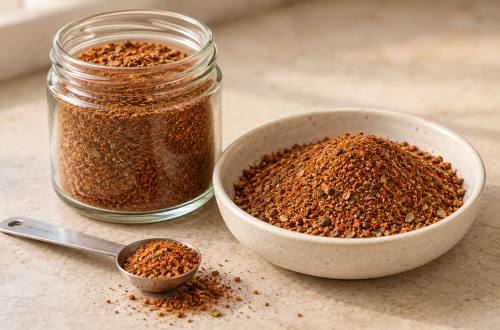
- Season. Rub the tenderloin with oil. Mix the salt, garlic powder, paprika, and pepper, then coat all sides evenly.
- Roast. Place the tenderloin on the pan with space around it. Start checking the center at 16 minutes. Continue roasting until the lowest center reading is 145°F; a 1- to 1½-pound piece often needs roughly 18 to 25 minutes.
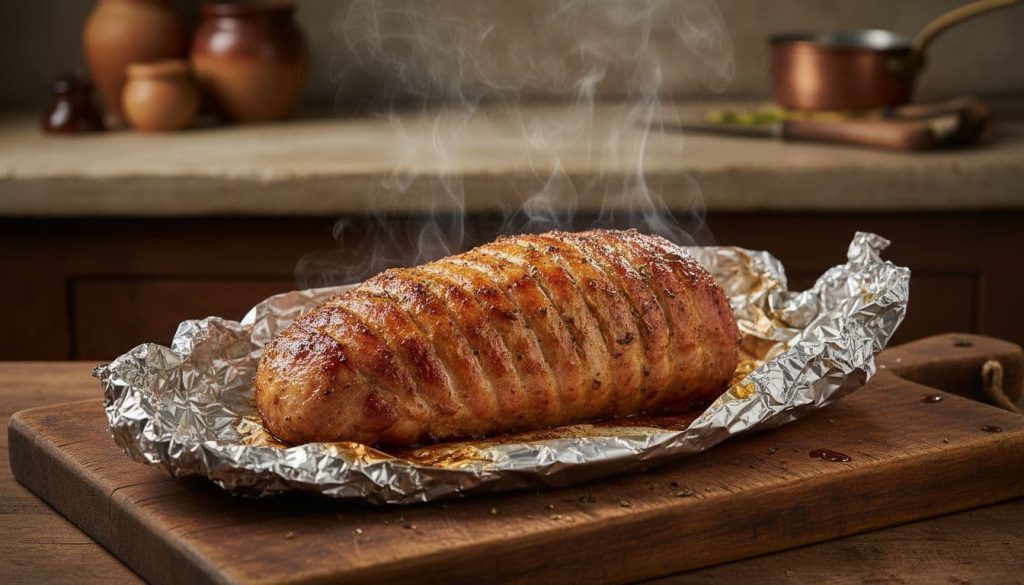
- Rest. Move the pork to a clean board and tent it loosely with foil. Rest at least 3 minutes; 5 to 10 minutes makes slicing easier. Do not reuse a plate that held raw pork unless it has been washed.
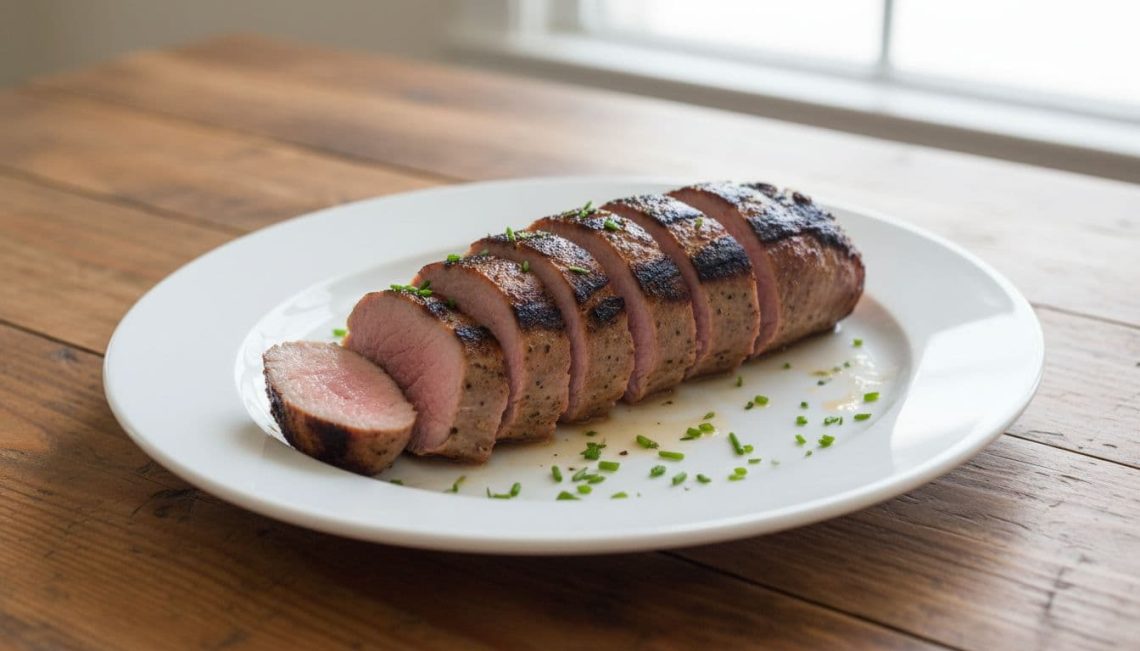
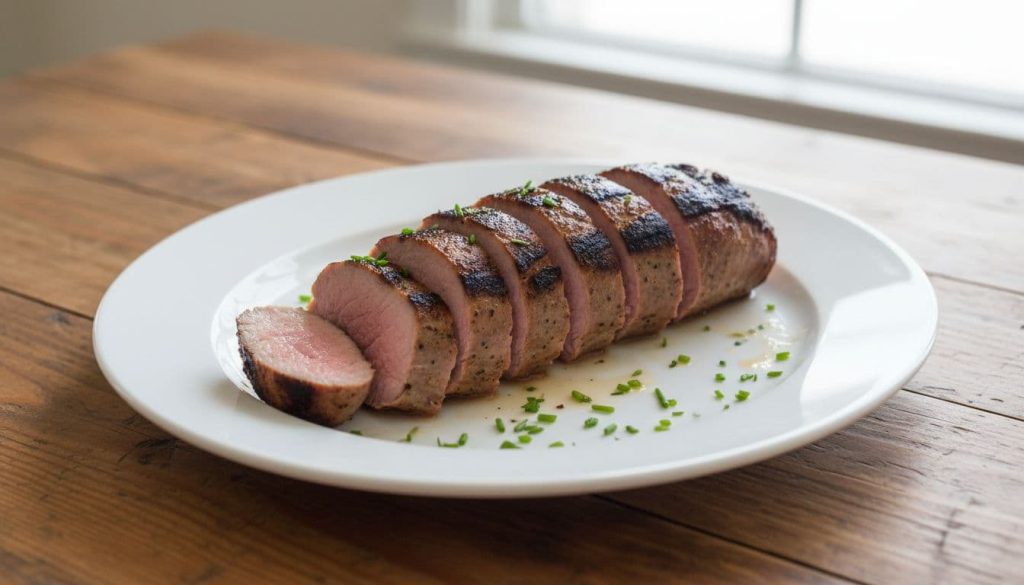
- Slice. Cut across the grain into ½- to ¾-inch slices. Spoon any clean resting juices over the meat.
A separate searing step is optional. It adds browning but also shortens the oven phase. If you sear in an oven-safe skillet for about 2 minutes on each broad side, transfer the skillet to a 400°F oven and start checking the center after about 8 minutes. The thermometer still controls the finish.
Adjust the same temperature rule for the grill
Prepare a two-zone grill with a medium-high direct side and a cooler indirect side. Oil and season the tenderloin as above. Brown it over direct heat, turning every 2 to 3 minutes, then move it to indirect heat if the exterior darkens before the center is ready. Start checking around 12 minutes; many pieces finish in roughly 14 to 20 minutes, but grill heat and tenderloin thickness vary widely.
Remove the pork only when the coolest center reading is 145°F, then rest it for at least 3 minutes. A rub containing sugar can scorch over direct high heat, so omit sugar or reserve a sweet glaze for the final minutes.
Resting and slicing without guesswork
Rest the tenderloin on a clean board under a loose foil tent. A tight wrap traps steam and softens the browned surface. The required minimum is 3 minutes after the pork reaches 145°F; allowing 5 to 10 minutes is practical for carving and gives the juices time to redistribute.
Look at the direction of the visible muscle fibers and slice across them. Cutting across the grain shortens the fibers in each bite. Slices about ½ to ¾ inch thick also cool more slowly than paper-thin slices. If the center is below 145°F when checked, return the pork to the heat, bring the center to 145°F, and begin a new 3-minute rest.
Troubleshooting dry, pale, or uneven pork
| Problem | Likely cause | Practical correction |
|---|---|---|
| Dry slices | The center cooked well beyond 145°F, or the slices were held hot too long. | Check earlier, use several center readings, and rest off the heat once the lowest reading reaches 145°F. |
| Thin end is overdone | The tenderloin tapers sharply. | Fold and tie the tail under, or keep that end away from the hottest area. |
| Exterior is dark but center is cool | Heat is too intense or the pan is too close to the broiler. | Reduce the oven heat slightly or move grilled pork to indirect heat, then continue to 145°F. |
| Pork is pale | The surface was wet or the pan was crowded. | Pat it dry, leave space around it, and use a preheated oven or a brief skillet sear. |
| Thermometer readings jump around | The probe is in a thin section, touching metal, or not centered. | Reinsert from the side and compare two or three spots in the thickest section. |
A citrus-heavy marinade is not a substitute for temperature control and can soften the exterior if left too long. For flavor changes, keep the oil-and-salt base and swap paprika for dried thyme, rosemary, cumin, or mild chile powder. If using a salty prepared blend, reduce or omit the separate salt. Pork loin is not a direct substitution because its size and timing are different.
Serving ideas that add contrast
Serve the slices with a crisp green vegetable and a sauce added at the table. Roasted asparagus with Parmesan adds a savory side, while browned roasted broccoli can cook in a separate pan. For a richer finish, spoon on a small amount of simple garlic butter sauce after slicing rather than cooking the lean pork in the sauce.
Cooling, storage, freezing, and reheating
- Cool promptly: Refrigerate cooked pork within 2 hours, or within 1 hour when the room or outdoor temperature is above 90°F. Divide a large amount into shallow containers so it cools faster.
- Refrigerate: Store covered cooked-meat leftovers for 3 to 4 days.
- Freeze: Wrap meal-size portions tightly, label the date, and freeze. FoodSafety.gov gives a 2- to 6-month freezer-quality range for cooked meat and poultry leftovers; freezing longer may reduce quality even when continuously frozen.
- Thaw: Thaw in the refrigerator, in cold water changed every 30 minutes, or in the microwave. Cook or reheat promptly after cold-water or microwave thawing.
- Reheat: Add a spoonful of broth or water, cover, and warm gently in the oven, skillet, or microwave until the leftovers reach 165°F. Thin slices reheat faster but can dry out, so check early.
The safe sequence is therefore simple: measure 145°F in the center while the tenderloin is still on the heat, rest at least 3 minutes, then slice. Use the estimated cooking windows to plan dinner, but let the thermometer make the final decision.