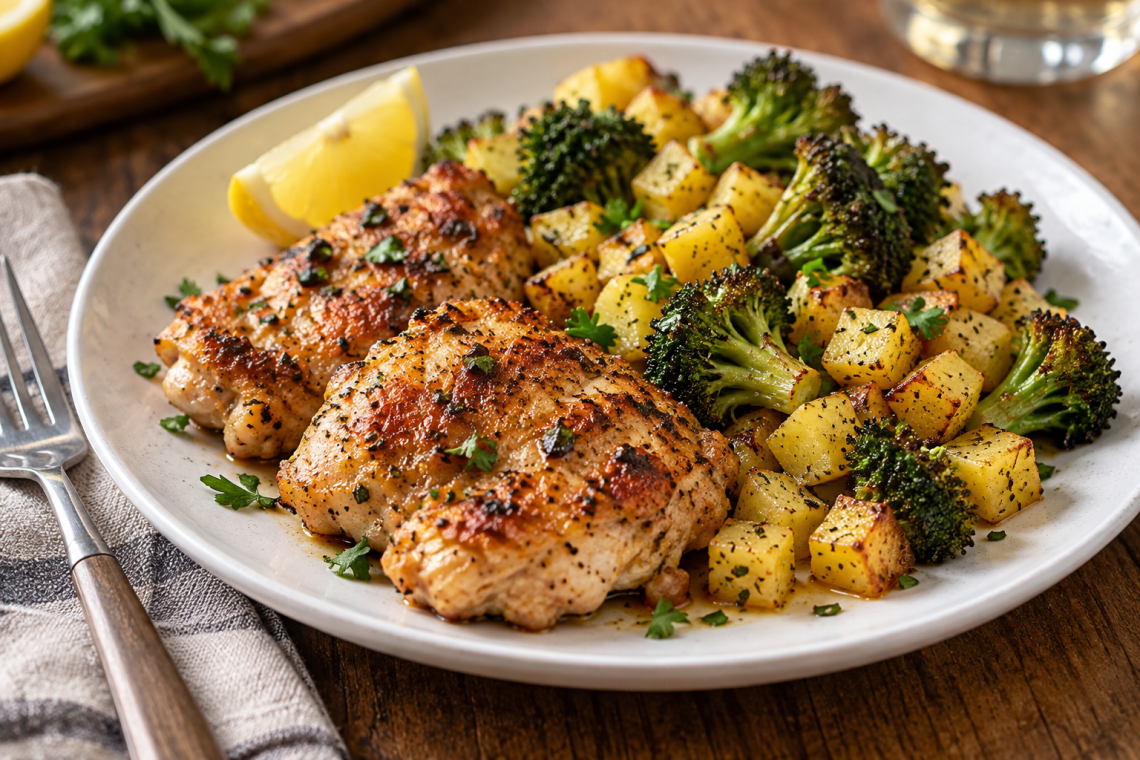
A bag of broccoli, a few potatoes, and a package of chicken can become a complete dinner when each ingredient gets the time and space it needs. These sheet pan chicken thighs with frozen broccoli and potatoes use a staggered method: potatoes begin first, boneless thighs join once the potatoes have started softening, and frozen broccoli roasts on a second pan. The extra pan gives the broccoli room to release steam while the chicken and potatoes develop browned edges.
The seasoning is deliberately straightforward: lemon, paprika, garlic, and oregano. A little lemon juice goes on after roasting, where it tastes bright without wetting the vegetables during their browning stage. Expect tender broccoli with some browned tips, rather than the texture of fresh broccoli or deep-fried potatoes.
Jump to recipe · Print Recipe · Rate this recipe
Use two pans for potatoes, chicken and broccoli
- Cut the potatoes into even ¾-inch pieces and give them a 20-minute head start on the first rimmed sheet.
- Add boneless, skinless chicken thighs to the spaces among the potatoes, leaving room between pieces.
- Shake away large ice crystals and spread the frozen broccoli on its own second rimmed sheet. Put it in the oven at the same time as the chicken so its moisture can escape separately.
Check the thickest parts of several thighs for at least 165°F. The potatoes must be tender, and those exposed to chicken juices must also reach 165°F before serving. Follow the broccoli package’s cooking directions. If the chicken finishes first, move it to a clean plate and continue roasting the vegetables.
Dinner at a glance
- Serves: 4, with approximately 1½ small thighs per person.
- Prep: 15 minutes. Cook: about 45 minutes. Rest: 5 minutes. Total: about 65 minutes.
- Oven: 425°F / 220°C, conventional setting.
- Equipment: two 18-by-13-inch rimmed metal baking sheets, a large bowl, tongs, a thin spatula, and an instant-read thermometer.
Two pans, one oven clock
Start this clock when the potatoes enter the preheated oven; the 15-minute preparation period comes before it. These checkpoints help you coordinate the trays, while the thermometer and vegetable texture decide when each part is finished.
| Oven time | Next action |
|---|---|
| 0 minutes | Put the potatoes on the lower rack. |
| 20 minutes | Add the chicken to the potato tray and put the separate broccoli tray on the upper rack. |
| 32 minutes | Turn the broccoli and rotate the trays; swap rack positions if needed. |
| 40 minutes onward | Check each thigh for 165°F and check both vegetables. Continue cooking anything unfinished; let the fully cooked chicken rest for 5 minutes before serving. |
Shopping list and ingredient jobs
- 1 pound yellow potatoes, scrubbed and cut into ¾-inch pieces
- 1¾ pounds boneless, skinless chicken thighs, about 6 small thighs, thawed
- 12 ounces plain frozen broccoli florets, kept frozen until needed
- 3 tablespoons olive oil, divided
- 1 teaspoon fine salt, divided, plus more only after tasting
- 1 teaspoon sweet paprika
- 1 teaspoon garlic powder, divided
- 1 teaspoon dried oregano
- ½ teaspoon black pepper, divided
- 1 lemon, zest finely grated and juice reserved separately
- 2 tablespoons chopped parsley, optional
Yellow potatoes hold their shape and develop creamy centers. The ¾-inch measurement matters more than whether every piece is a perfect cube. Large chunks can remain firm after the chicken finishes. Boneless thighs keep this schedule manageable; bone-in thighs require a different timing plan. Plain frozen florets work better here than broccoli in cheese sauce or a heavily iced block.
Garlic powder distributes evenly and is less likely to scorch than tiny pieces of fresh garlic exposed to a hot sheet pan. Paprika adds color and a mild savory note. Lemon zest seasons without adding much liquid; juice is saved for the table so everyone can adjust the sharpness.
How to make sheet pan chicken thighs with frozen broccoli and potatoes
- Heat the oven and organize the pans. Position racks in the upper and lower thirds and heat to 425°F. Line both rimmed sheets with parchment rated for 425°F if desired. Reserve the full 3 tablespoons of oil for coating the food. Avoid a deep casserole dish, which traps more steam around the vegetables.
- Give the potatoes a head start. Toss potatoes with 1 tablespoon oil, ⅜ teaspoon salt, ¼ teaspoon garlic powder, and ⅛ teaspoon pepper. Spread across one sheet with a cut side against the metal. Roast on the lower rack for 20 minutes. They should begin coloring underneath but need not be fully tender.
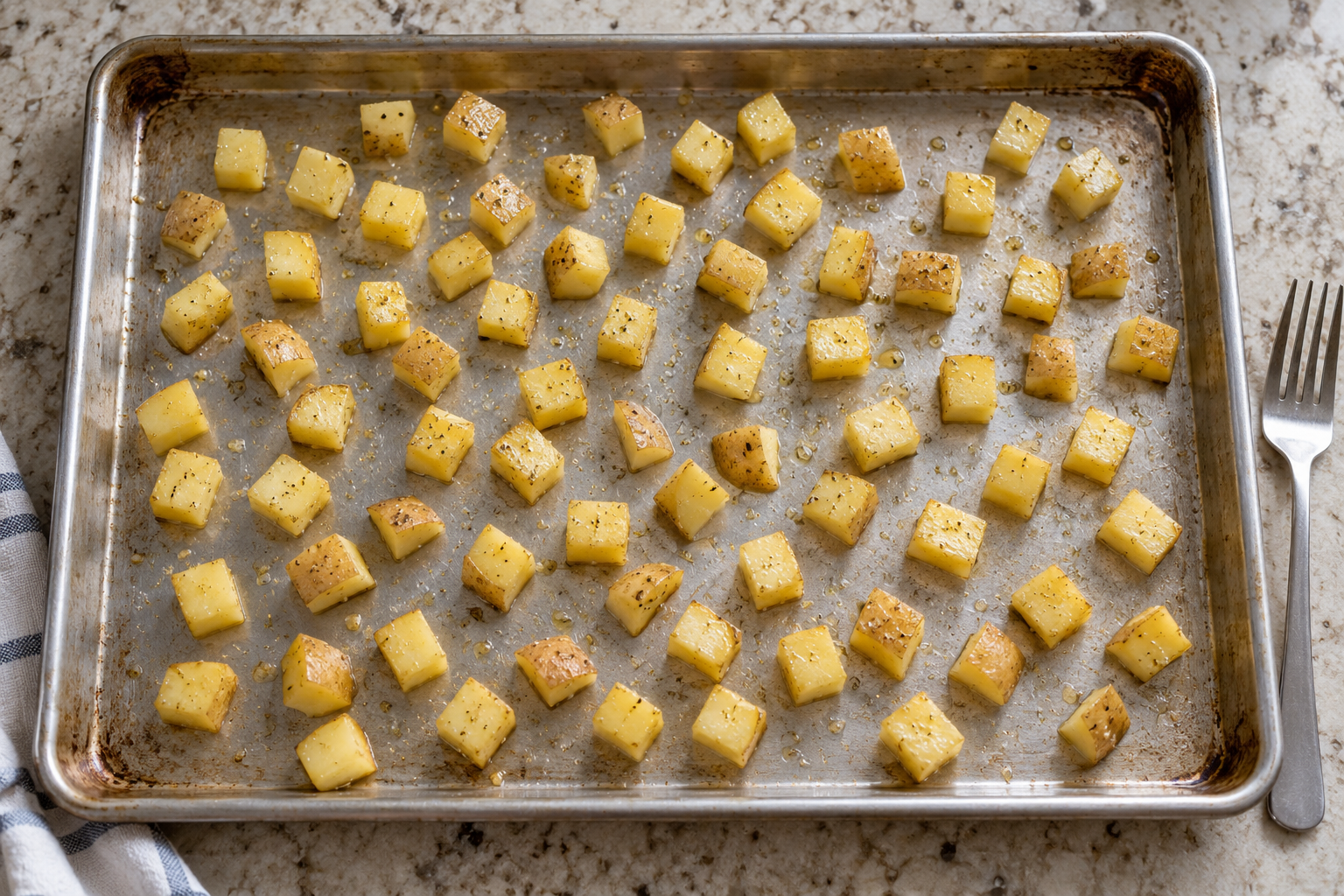
- Season the chicken separately. Pat the thighs dry; do not rinse raw poultry. In a clean bowl, combine the chicken with 1 tablespoon oil, paprika, oregano, ½ teaspoon garlic powder, ⅜ teaspoon salt, ¼ teaspoon pepper, and half the lemon zest. Open out folded thighs so their thickest sections are reasonably even.
- Add chicken to the first pan. Turn the potatoes and move them around the outer portion of the sheet. Place thighs in the open spaces, leaving room between pieces. Return the sheet to the oven. Wash hands and clean any tools or surfaces that touched raw chicken before handling cooked food.
- Start the broccoli on its own sheet. Shake loose any large ice crystals from the bag. Toss the frozen florets with the remaining 1 tablespoon oil, ¼ teaspoon each salt and garlic powder, and the remaining ⅛ teaspoon pepper. Spread on the second sheet and place on the upper rack at the same time the chicken goes in.
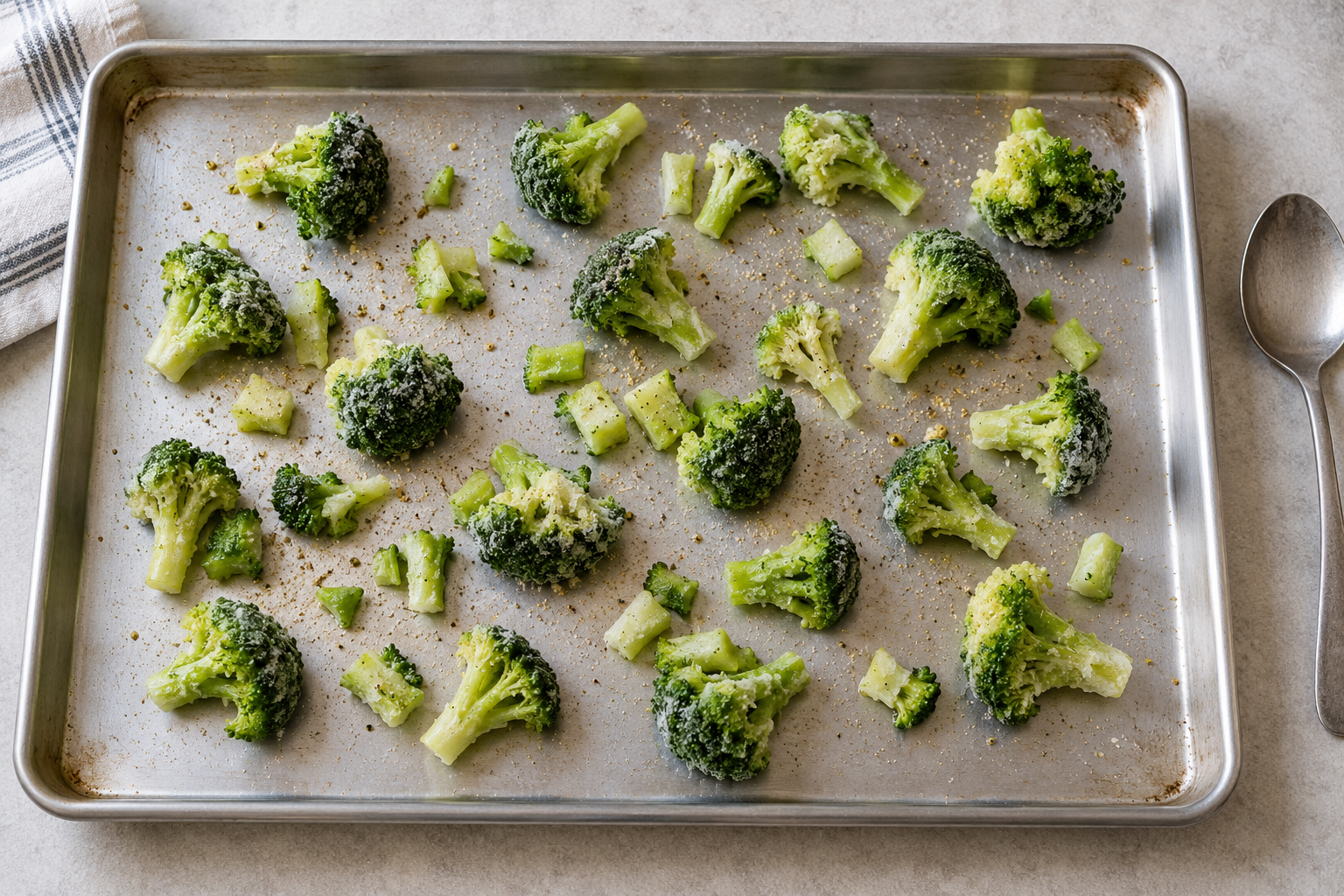
- Rotate for more even cooking. After 12 minutes, turn the broccoli and rotate both sheets front to back. Swap the upper and lower positions if one pan is browning noticeably faster. Separate any florets that have clumped together. Keep the oven door open only as long as needed to make these adjustments.
- Check each component. Begin checking chicken after approximately 20 minutes of its cooking time. Insert the thermometer into the thickest part of several thighs; each must reach at least 165°F. Potatoes should yield easily to a knife. Because they share a pan with raw chicken, keep them in the oven until the chicken is fully cooked and check that potatoes in the chicken-contact areas also reach 165°F before serving. Do not remove potatoes early from that pan. Broccoli should be tender and cooked through according to its package directions, including any specified internal temperature. Browning alone does not confirm that a frozen floret is fully cooked. Allow another 3–8 minutes where needed.
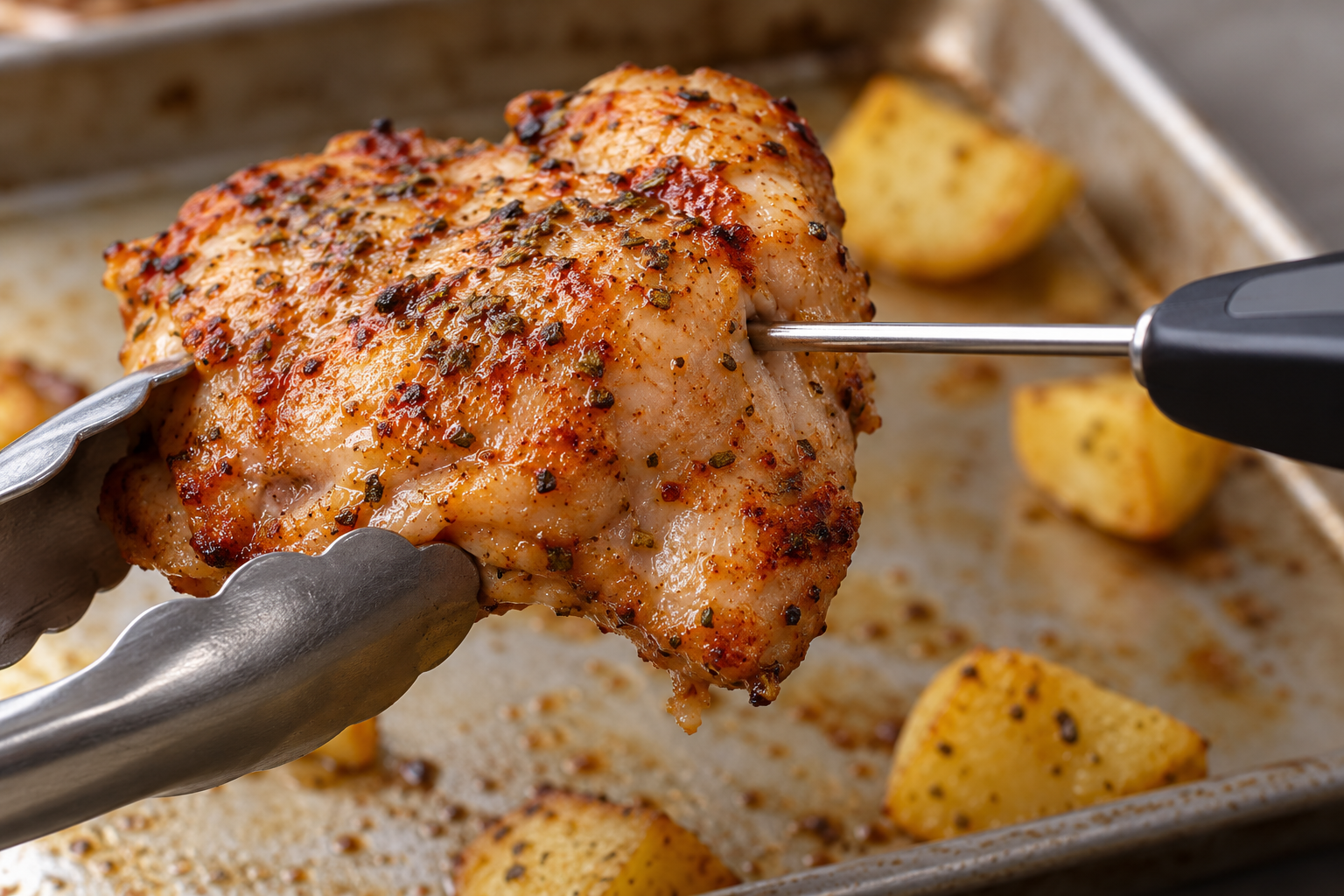
- Finish without steaming the edges. Transfer cooked chicken to a clean plate and let it rest for 5 minutes while you check the vegetables. Toss the broccoli and potatoes with the remaining zest and 1 tablespoon lemon juice. Add parsley if using and serve with extra lemon wedges. Taste vegetables before adding further salt.
Use the doneness cues to manage dinner
Chicken thighs
Doneness cue: 165°F or higher in the thickest part
If it needs more time: Leave underdone pieces in the oven; remove finished pieces individually.
Potatoes
Doneness cue: A small knife passes through the center easily; pieces exposed to raw chicken juices also reach 165°F.
If it needs more time: Keep them in the oven until the chicken is fully cooked, then continue roasting if their centers are still firm.
Broccoli
Doneness cue: Hot centers, tender stems, some dry browned edges
If it needs more time: Separate crowded pieces and continue roasting to package directions.
A thigh can look golden before its center is safe, and cooked poultry can retain a little pink color. Use the thermometer as the deciding check. The FoodSafety.gov temperature chart lists 165°F for poultry. Start checking early rather than adding extra time automatically to every piece.
Small changes that keep the method reliable
For a smokier dinner, use smoked paprika in place of sweet paprika. For a milder plate, keep the seasoning as written and offer hot sauce separately. Replace oregano with dried thyme at the same quantity. Adding a sweet bottled sauce before roasting can encourage burning; serve that sauce afterward or use only a thin coating near the end.
Fresh broccoli can replace frozen, but it may finish sooner. Check small florets after 15 minutes. Chicken breasts are not a direct timed swap because thickness varies widely and lean meat dries sooner; use the same 165°F endpoint and begin checking early. Bone-in chicken does not fit the stated schedule.
If cooking for two, halve all ingredients and keep the same cut sizes. Keep the frozen broccoli on a separate sheet, using smaller pans if needed and leaving enough open metal for moisture to escape. For eight servings, use separate batches or enough oven space for four sheets; doubling ingredients on the original two pans will compromise browning.
Serving and using the leftovers
This plate already includes a vegetable and potatoes. Add a small cucumber salad for a cool, crisp contrast, or offer plain yogurt mixed with a squeeze of lemon as a dipping sauce. Slice leftover chicken across the grain for a lunch wrap, with reheated potatoes on the side. Keep dressing separate until the wrap is assembled.
Refrigerate leftovers in shallow containers within 2 hours, or within 1 hour if the surrounding temperature exceeds 90°F. Keep the refrigerator at 40°F or below and use within 3–4 days, following USDA leftover guidance. Reheat only the portion you need to 165°F. A covered oven-safe dish helps protect the chicken; uncover toward the end if you want the vegetables drier.
For another simple chicken dinner, see air fryer chicken breast without oil. If you want a second vegetable alongside this tray, small-batch braised red cabbage offers a softer, tangy contrast.
Frequently asked questions before you cook
Do I thaw the broccoli first?
No. This method is designed around plain frozen florets. Thawing adds an extra step and leaves wet surfaces that need thorough blotting. Keep the bag frozen while the potatoes start, then separate the florets as well as you can before spreading them on the second sheet.
Why use two pans for a sheet pan dinner?
The combined food covers too much surface area for good browning on one standard sheet. Two shallow pans let broccoli moisture escape without surrounding the potatoes. A crowded pan can still cook the ingredients, but the vegetables are likely to be softer and less browned.
Can I cook this directly from frozen chicken?
Use thawed chicken for this recipe. Frozen thighs change both the timing and the amount of liquid in the pan. Thaw them safely in the refrigerator before beginning; do not thaw poultry on the counter.
Why are the potatoes still firm?
Check their size first. Pieces larger than ¾ inch need longer. An oven that was not fully heated also delays softening. Remove the chicken when it reaches its endpoint, then continue cooking the potatoes until the center feels tender.
Can I prepare anything the night before?
Mix the dry seasonings and trim the chicken, keeping it covered in the refrigerator. Cut potatoes closer to cooking, or refrigerate them submerged in cold water and dry them thoroughly before roasting. Keep the broccoli frozen.
What is the most useful timing rule?
For sheet pan chicken thighs with frozen broccoli and potatoes, give the potatoes their full head start and judge the finish ingredient by ingredient. That single habit does more for the final texture than extending the cooking time for everything together.
Sheet Pan Chicken Thighs Recipe Card
Organize the two trays before the oven door opens
Set out two heat-safe landing spaces, a clean plate for cooked chicken, and the thermometer before starting. When both trays are hot, this small setup makes it easier to turn florets and check centers without balancing a baking sheet or searching for an oven mitt.
Divide the seasonings once
The oil, salt, garlic powder, and pepper are shared among three components. Measure the full totals first, then separate them as shown. These are portions of the original ingredient amounts, not additional seasoning to sprinkle on after following the recipe.
| Component | Oil and salt | Garlic powder and pepper |
|---|---|---|
| Potatoes | 1 tbsp oil; ⅜ tsp salt | ¼ tsp garlic; ⅛ tsp pepper |
| Chicken | 1 tbsp oil; ⅜ tsp salt | ½ tsp garlic; ¼ tsp pepper |
| Broccoli | 1 tbsp oil; ¼ tsp salt | ¼ tsp garlic; ⅛ tsp pepper |
To measure ⅜ teaspoon, combine ¼ teaspoon with ⅛ teaspoon. Add the paprika and oregano to the chicken, along with half the lemon zest. The remaining zest and measured lemon juice finish the vegetables after roasting. Keep the chicken bowl and its utensils separate from ready-to-eat ingredients.
When the components finish at different times
Remove a chicken thigh to the clean plate only after its thickest center reaches at least 165°F. Keep potatoes exposed to raw chicken juices on their tray until the chicken is fully cooked; those potatoes must also reach 165°F and be tender before serving. A browned potato edge does not confirm either requirement.
The broccoli is on a separate pan, so it can finish independently once it is cooked through according to its package directions. If it needs longer, separate crowded pieces and continue roasting. Do not put cooked broccoli into the bowl or tray that held raw chicken.
Can I use only one oven rack?
The written schedule assumes two racks with room for air around both trays. If your oven cannot accommodate that arrangement, cook in separate batches or choose another method. Stacking pans closely or crowding everything onto one sheet changes the cooking conditions and makes the published timing less useful.
Should I broil the vegetables for more color?
Broiling is not necessary for this method. It adds intense top heat and may be unsuitable for parchment or other liners. Prioritize cooked centers and the chicken’s temperature before color. If the vegetables are pale, improve spacing and dryness on the next batch rather than treating browning as the safety check.
Bring plates and lemon wedges to the table while the chicken rests. For sheet pan chicken thighs with frozen broccoli and potatoes, an organized finish helps you serve each component when ready without continuing to cook the entire dinner just because one piece needs more time.
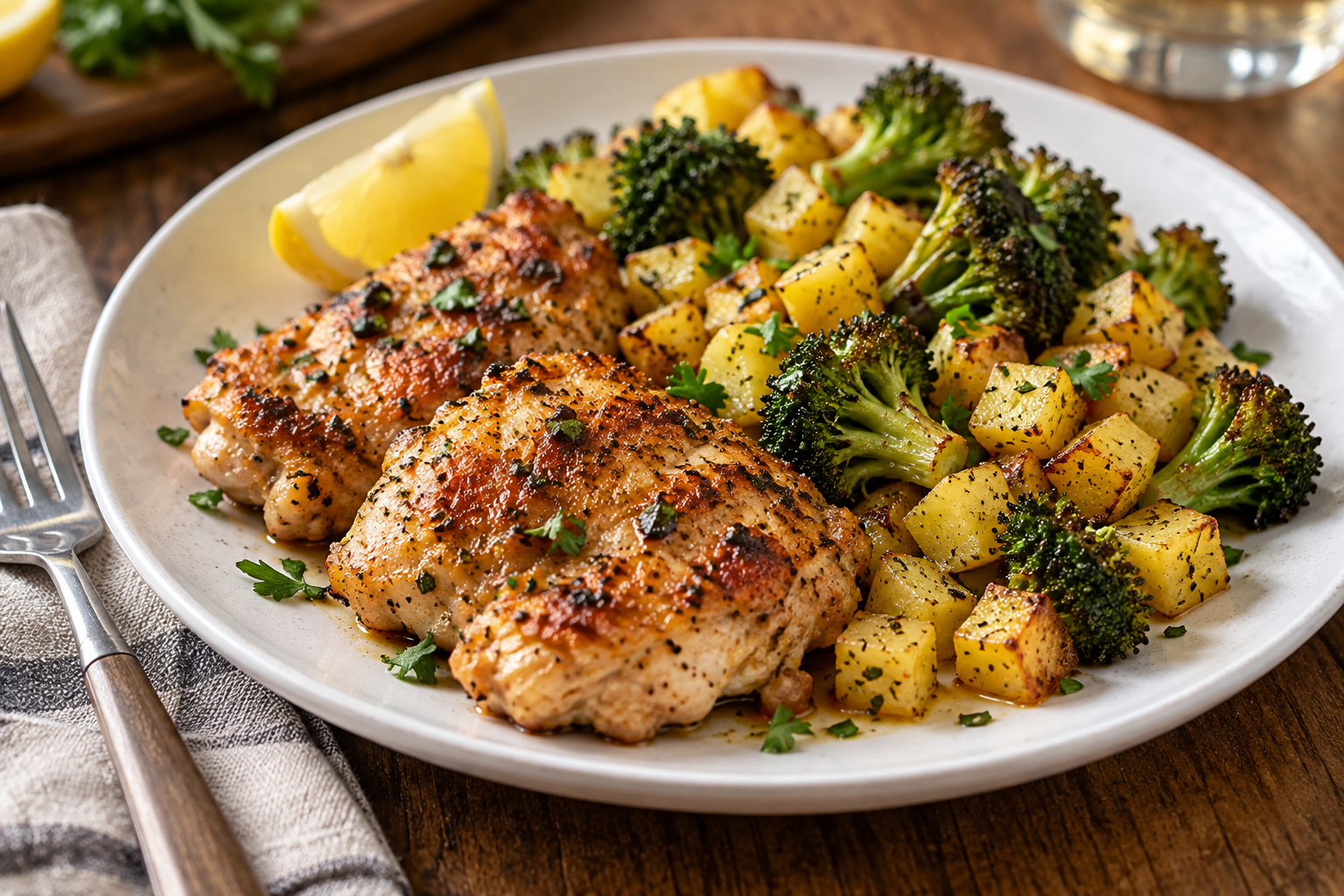
Sheet Pan Chicken Thighs with Frozen Broccoli and Potatoes
Ingredients
Equipment
Method
- Position racks in the upper and lower thirds of the oven and preheat to 425°F / 220°C. Line two rimmed sheets with parchment rated for this temperature if desired.
- Toss the potatoes with 1 tablespoon oil, ⅜ teaspoon salt, ¼ teaspoon garlic powder and ⅛ teaspoon pepper. Spread on one sheet with cut sides down and roast on the lower rack for 20 minutes.
- Pat the thawed thighs dry; do not rinse raw poultry. Toss with 1 tablespoon oil, paprika, oregano, ½ teaspoon garlic powder, ⅜ teaspoon salt, ¼ teaspoon pepper and half the lemon zest. Open folded thighs so the thick portions are reasonably even.
- Turn the potatoes and move them toward the edges. Place the thighs in the open spaces with room between pieces. Return the pan to the oven; the potatoes continue roasting throughout this second stage. Wash hands and clean tools and surfaces that touched raw chicken.
- Shake loose large ice crystals. Toss the frozen florets with the remaining 1 tablespoon oil, ¼ teaspoon salt, ¼ teaspoon garlic powder and ⅛ teaspoon pepper. Spread on the second sheet and place it on the upper rack when the chicken goes into the oven.
- After 12 minutes, turn the broccoli and rotate both sheets front to back. Swap rack positions if one pan is browning faster, and separate any clumped florets.
- Begin checking the chicken after about 20 minutes of its cooking time. Before removing any thigh to rest, insert the thermometer into its thickest part and confirm at least 165°F / 74°C; check several pieces because thickness varies. Potatoes should yield to a knife; pieces exposed to raw chicken juices must also reach 165°F / 74°C. Keep them on the pan until the chicken is fully cooked, then continue roasting if their centers are still firm. Broccoli should be tender and cooked through according to its package directions, including any specified internal temperature. Browning alone does not confirm that a frozen floret is fully cooked. Continue cooking any component that needs another 3–8 minutes.
- Move the cooked chicken to a clean plate and rest for 5 minutes. Toss the vegetables with the remaining zest and 1 tablespoon lemon juice. Add parsley if using, taste before adding more salt, and serve.