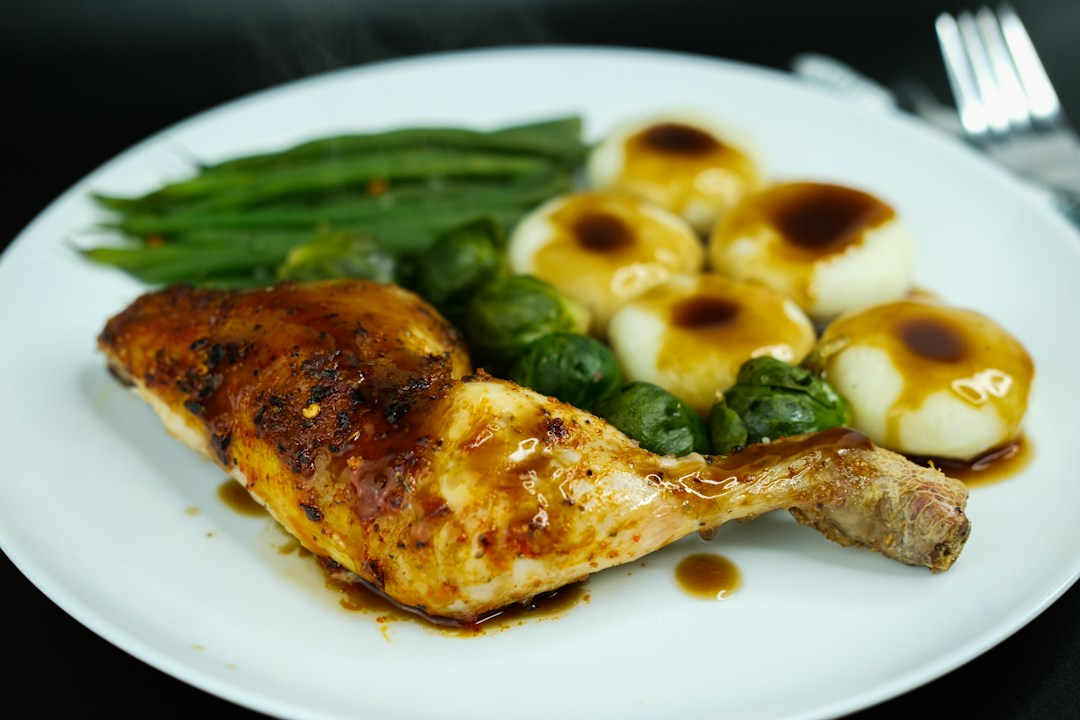
This skillet chicken with canned peaches uses a pantry can of fruit to make a savory dinner with a light mustard-thyme sauce. Boneless chicken thighs brown first, then the peaches warm briefly in the sauce so they keep their shape. A little reserved peach juice supplies sweetness, while Dijon and cider vinegar keep the result balanced.
Affiliate disclosure: As an Amazon Associate I earn from qualifying purchases. These paid links open Amazon search results for comparing equipment.
Set out a 12-inch skillet (paid link) for the chicken and peach sauce and an instant-read thermometer (paid link) for the chicken doneness check before serving.
Jump to the recipe. Choose peaches packed in juice rather than heavy syrup for the measured version. Canned peaches are already tender, so they belong near the end of cooking instead of spending the entire chicken-browning time in the skillet.
Two simple tools make the pan easier to manage: a wooden cooking spoon (paid link) for loosening the browned bits and folding in the peaches, plus kitchen tongs (paid link) for turning the chicken without piercing it. Choose sturdy, heat-safe tools that feel comfortable in your hand.
Balance skillet chicken with canned peaches and Dijon
- Drain peaches and measure the fruit separately from the packing liquid.
- Brown chicken first, then remove it while the pan sauce is built from the fond.
- Add peach liquid only in small amounts so the sauce stays savory rather than syrupy.
- Whisk Dijon in before returning the chicken, then add peach pieces near the finish.
If the sauce tastes sweet, correct it with mustard or acid before adding salt. Return the chicken only long enough to coat and heat through.
Read the peach label before measuring
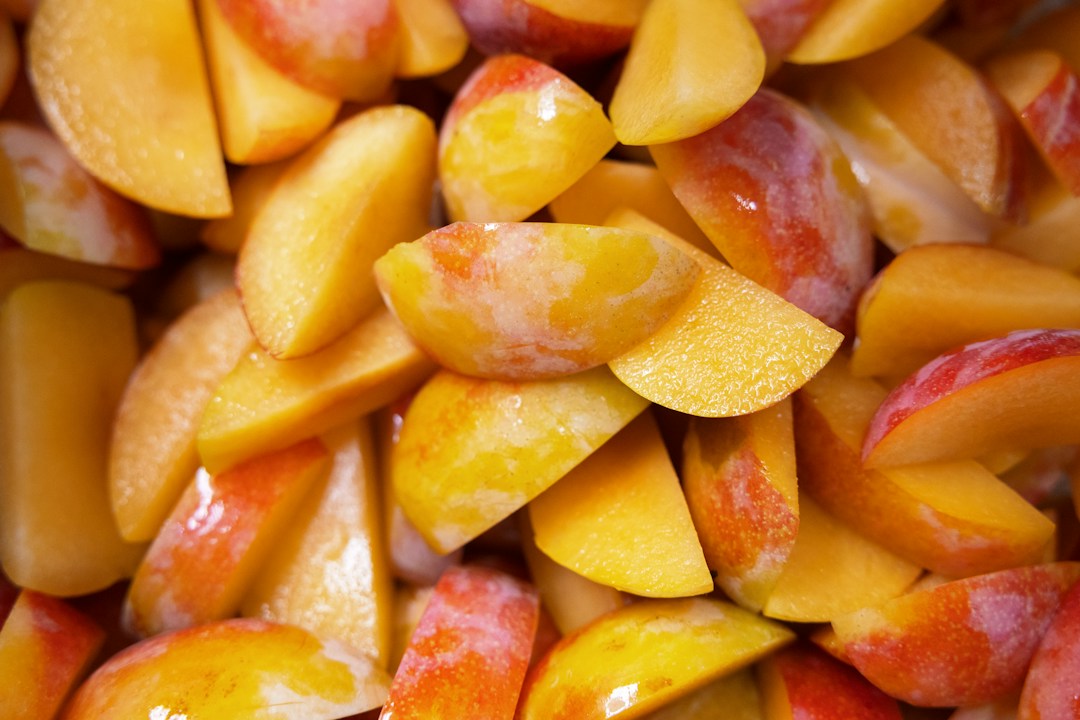
Peaches packed in juice, light syrup, and heavy syrup bring different amounts of sweetness. This recipe uses a modest 1/4 cup of the packing juice, which adds fruit flavor without turning the sauce into a glaze. Drain the remaining liquid rather than pouring the entire can into the pan.
Sliced peaches are easiest to distribute. If you have halves, cut them into two or three wedges after draining. Very small diced peaches can work, but they soften into the sauce more quickly and will not give the same visible pieces on the plate.
Keep the drained fruit in a separate bowl until the sauce is ready. That makes it easier to judge the liquid and prevents the peaches from breaking during scraping and stirring. A broad spoon is useful once the fruit enters the pan.
Your cooking plan
Skillet chicken with canned peaches
Before heating the pan: drain the peaches and reserve exactly 1/4 cup juice; whisk the juice with broth, Dijon, vinegar and thyme; mince the shallot; and pat the chicken dry.
The order matters: brown and fully cook the chicken first, make the sauce in the same skillet, then warm the canned peaches briefly at the end. This keeps the fruit from breaking down.
Recipe overview
Yield: 4 servings. Preparation: about 15 minutes. Cooking: about 25 minutes. Total: about 40 minutes. Equipment: 12-inch skillet, tongs, strainer, small bowl, measuring jug, and instant-read thermometer.
Ingredients
- 1 1/4 pounds boneless skinless chicken thighs, about 4–6 pieces
- 1/2 teaspoon fine salt
- 1/4 teaspoon black pepper
- 1 tablespoon olive oil
- 1 can sliced peaches in juice, 15 ounces, drained with 1/4 cup juice reserved
- 1 small shallot, finely minced, about 3 tablespoons
- 1/3 cup reduced-sodium chicken broth
- 2 teaspoons Dijon mustard
- 2 teaspoons apple cider vinegar, plus 1 teaspoon only if needed
- 1/2 teaspoon dried thyme
- 1 teaspoon cornstarch mixed with 1 tablespoon cold water, optional for a thicker sauce
- 2 tablespoons chopped parsley
Step-by-step instructions
- 1. Set up your ingredients. Pat the chicken dry, trim loose fat, and unfold tightly tucked sections so the thighs are a similar thickness. Season both sides with salt and pepper. Drain the peaches and reserve 1/4 cup juice. In a small bowl, whisk the reserved juice with the broth, Dijon, vinegar and thyme. Mince the shallot and keep the peaches in a separate bowl. Ready cue: everything should be measured before the chicken hits the hot pan.
- 2. Brown the chicken. Heat the oil in a 12-inch skillet over medium-high heat. Add the thighs in one layer, leaving space between them; work in batches if needed. Leave them undisturbed for about 5–6 minutes so a golden crust can form. Look for: the chicken should release from the pan fairly easily when browned. If the drippings turn dark brown or black, lower the heat.
- 3. Cook through and remove. Turn the thighs and cook for about 5–7 minutes more, adjusting the heat as needed. Check every piece in its thickest part with an instant-read thermometer. Cook until each piece reaches 165°F, then move it to a clean plate. Doneness cue: use the thermometer rather than color or timing; thicker pieces may need extra minutes.
- 4. Make the Dijon pan sauce. Reduce the heat to medium-low. Add the shallot and stir for about 1 minute until softened. Pour in the peach-juice mixture and scrape up the flavorful browned bits with a wooden spoon. Simmer gently for 2–3 minutes. Look for: a loose, glossy sauce that lightly bubbles. If the pan has burned bits, wipe it out before adding the liquid so the sauce does not taste bitter.
- 5. Adjust the sauce. Keep the sauce as a light pan sauce, or stir the optional cornstarch-and-water slurry and add it a little at a time while the sauce simmers. Cook for about 1 minute. Thickness cue: the sauce should lightly coat the back of a spoon, not turn sticky. If it gets too thick, loosen it with a tablespoon of water or broth.
- 6. Add the peaches last. Fold in the peach slices and warm over low heat for 1–2 minutes. Return the cooked chicken and any clean resting juices to the skillet. Spoon sauce over the chicken and warm just until everything is hot. Look for: the peach slices should be warmed through but still hold their shape; avoid a vigorous boil.
- 7. Taste, garnish and serve. Take the skillet off the heat and stir in the parsley. Taste the sauce; add the optional extra teaspoon of vinegar a little at a time if it tastes too sweet. Spoon the chicken, peaches and sauce over rice, mashed potatoes or couscous.
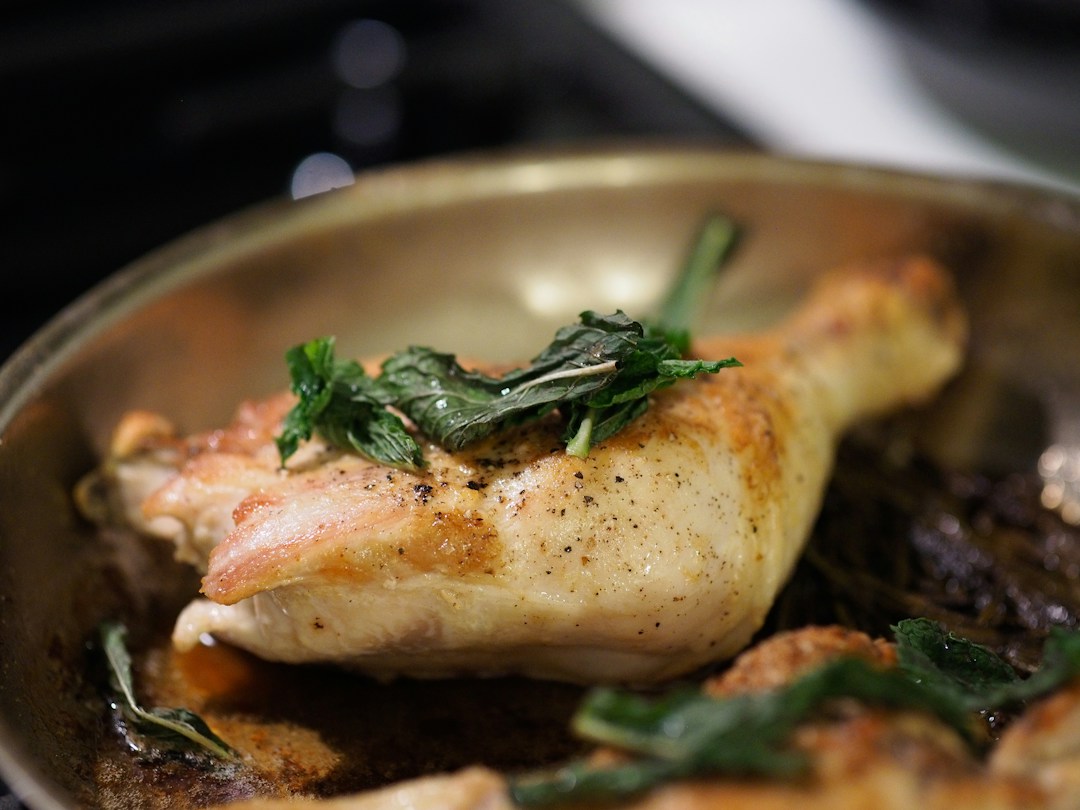
Use temperature to protect the chicken’s texture
Boneless thighs vary in size and thickness. One small piece may finish while another still needs several minutes. Check each piece rather than assuming a single reading represents the entire skillet. Insert the thermometer into the thickest center without touching the pan.
The USDA safe-temperature chart specifies 165°F for poultry. Browning adds flavor but does not prove that the center has reached that point. The site’s chicken thigh doneness guide explains the same distinction in more detail.
Removing the cooked thighs while making the sauce gives you room to scrape and adjust the liquid. It also avoids simmering finished meat while waiting for the sauce to thicken. Keep the pause brief and complete the meal in the same cooking session.
Balance sweetness without adding a long ingredient list
Mustard supplies tang and a little body, while cider vinegar brings a clean acidic note. Start with the measured amount, then taste after the peaches have warmed. The fruit releases a little juice into the sauce, so the balance can change during that final minute.
If the sauce tastes too sweet, add vinegar a few drops at a time. If it seems too sharp, add a small spoonful of reserved peach juice or broth. Do not add a large amount of sugar automatically; the fruit may already provide enough sweetness.
Thyme gives the dish a savory direction without competing with the peaches. Dried rosemary can be stronger and more woody; if using it, crush finely and start with less. Fresh herbs can finish the plate, but a large mixed handful may hide the simple peach-mustard flavor.
Ingredient substitutions
Chicken breast cutlets can replace thighs, but they cook faster and dry more readily. Use even pieces, check temperature early, and remove them as soon as they reach 165°F. A thick whole breast needs a different cooking window and is not a direct replacement at the same timing.
Peaches in syrup can be used if necessary, but drain them well and use broth or water in place of the reserved syrup. Taste before adding more sweetness. Lightly rinsing very syrupy fruit can reduce surface syrup, though it also washes away some flavor.
Fresh peaches need enough cooking to soften, while frozen peaches may release more liquid. Both are different preparations from the canned version. If using either, cook the fruit in the sauce until tender before briefly returning the already cooked chicken.
Cornstarch is optional because the dish can be served with a thin pan sauce. If using it, mix with cold water first. Sprinkling dry starch directly into hot sauce creates lumps that are difficult to remove without breaking the fruit.
Control the heat and protect the pan sauce
A steady medium-high heat helps the chicken brown before its center overcooks. Let the skillet preheat, add the oil, and wait until it looks fluid and shimmers lightly; if it smokes heavily, lower the heat before adding the meat. The chicken should make a clear sizzle when it touches the pan. If the sound fades and liquid pools around the pieces, the skillet may be crowded or not hot enough.
A 12-inch skillet gives four to six boneless thighs room to brown in a single layer. If your pan is smaller, cook in two batches and add a little more oil only if the surface looks dry. Crowding traps steam, which slows browning and can leave the chicken pale. Keep the first batch on a clean plate while the second cooks, then continue with the sauce in the same pan.
The browned layer left behind after searing is called fond. When it is golden to deep brown, broth and reserved peach juice can loosen it and carry its savory flavor into the sauce. Black, bitter residue is different: do not scrape it into dinner. Wipe out burned bits, lower the heat, and start the shallot and sauce again in the clean skillet.
Use a wooden spoon to scrape gently across the bottom, then switch to a broad spoon or spatula when folding in the peaches. Canned fruit is already cooked and soft, so it needs only a brief warm-through. Keeping the sauce at a gentle simmer helps the slices hold their shape.
More chicken dinners and a place to share your variation
If you enjoy skillet-style chicken meals, try our lemon chicken and polenta for two for another cozy dinner, or make sheet-pan chicken drumsticks with butternut squash when you want an oven-based meal.
Have a family twist on fruit-and-savory chicken, a favorite side dish, or a question about adjusting the sauce? Join the Weeknight Dinners & Meal Planning forum to compare ideas, or visit The Family Table food and cooking community to share what you made.
Choose a side that catches the sauce
Plain rice, couscous, mashed potatoes, or noodles work well. Keep the side lightly seasoned until you taste the sauce with it. A green vegetable supplies contrast to the soft fruit, and roasted broccoli with browned edges is a practical choice.
If you prefer a lighter plate, serve with a crisp salad and a small piece of bread. Avoid combining several sweet sides, since peaches already provide that note. Start longer-cooking sides before searing the chicken so the finished skillet does not sit over heat waiting.
Troubleshooting the finished pan
Peaches fall apart: they were probably stirred too much or simmered too long. Add them late and fold gently. Small broken pieces still flavor the sauce, but the remaining slices should be handled with a broad spoon.
The sauce is too thick: add warm broth or water in tablespoons. Cornstarch continues thickening briefly after it enters the pan, so do not add the whole slurry again just because the first few seconds look thin.
The chicken is pale: it may have entered the pan wet or crowded. Pat it dry and allow space next time. If it is already fully cooked, do not leave it on the heat for an extended period only to force more color.
Storage and reheating
Refrigerate leftovers in shallow containers within 2 hours, or within 1 hour above 90°F. Keep at 40°F or below and use within 3–4 days. Reheat the chicken to 165°F, following USDA leftover guidance.
Store the chicken with sauce to help during reheating. Add a splash of water if the sauce has thickened. During reheating, bring the sauce briefly to a rolling boil, stirring carefully, then reduce the heat, cover, and continue until the chicken reaches 165°F. The peaches will soften further, so turn with care and avoid a prolonged boil. Reheat only what you plan to eat rather than repeatedly warming the whole batch.
Peach skillet kitchen notes
Your questions, answered
Quick, practical answers for choosing the fruit, adjusting the sauce and planning ahead.
Can I use peach halves?
Yes. Drain and cut them into wedges so they warm quickly and divide easily among servings. Large halves can stay cool in the middle during the brief finishing stage.
Do I need to marinate the chicken?
No. The measured recipe seasons the chicken directly and adds flavor through the pan sauce. A sweet marinade could burn during searing and would need a different approach.
Can I omit mustard?
Yes, though the sauce will have less tang and body. Taste after adding vinegar and peaches. The optional starch can still provide thickness if you want it.
Can I use a larger can of peaches?
Measure roughly the fruit from a 15-ounce can and reserve only 1/4 cup juice. Adding much more fruit and liquid changes the balance and can make the pan crowded.
Can I freeze this meal?
Freeze promptly in airtight portions and aim to use within 2 months for quality. Thaw in the refrigerator and reheat to 165°F. The peaches may become softer and the thickened sauce may need stirring.
Can skillet chicken with canned peaches be made for a larger family?
Double the ingredients but brown the chicken in batches or use two skillets. Build the sauce in a pan large enough to hold the cooked pieces without crowding. Check every piece for the safe cooking endpoint.
Kitchen note: use an instant-read thermometer to confirm every chicken piece reaches 165°F before serving.
Skillet Chicken with Canned Peaches and Dijon
Ingredients
Equipment
Method
- Prepare the ingredients. Pat the chicken dry, trim loose fat, and unfold any tightly tucked sections so the pieces have a reasonably even thickness. Season both sides with salt and pepper. Drain the peaches, measure the reserved juice, and whisk that juice with broth, mustard, vinegar, and thyme.
- Brown the first side. Heat the oil in the skillet over medium-high heat. Add the thighs in a single layer with a little space between pieces. Cook for about 5–6 minutes without constant movement, until the underside develops golden color. Lower the heat if the pan residue begins turning black.
- Turn and finish cooking. Turn the thighs and cook for another 5–7 minutes, adjusting heat as needed. Check the thickest part of each piece with a thermometer. Continue until all reach at least 165°F, then transfer to a clean plate. Thick or folded pieces may need more time than the estimate.
- Build the pan sauce. Reduce heat to medium-low. Add the shallot and cook for 1 minute, stirring. Pour in the peach-juice mixture and scrape up browned bits. Simmer for 2–3 minutes, keeping the sauce fluid. If the pan contains burned residue, wipe it out before making the sauce rather than incorporating bitter bits.
- Choose the sauce thickness. For a light pan sauce, continue as is. For a slightly thicker coating, stir the optional cornstarch slurry again and add it gradually while the sauce simmers. Cook for about 1 minute until it lightly coats a spoon. Stop before it becomes a sticky paste; add a spoonful of water if needed.
- Warm the peaches gently. Add the peach slices and simmer over low heat for 1–2 minutes until hot. Return the cooked chicken and its clean resting juices, spoon sauce over the pieces, and warm briefly. Avoid a long second simmer now that the meat is fully cooked.
- Finish and serve. Remove from the heat, add parsley, and taste the sauce. Use the optional extra teaspoon vinegar only if the sweetness needs balancing. Divide chicken and peaches among plates and spoon the sauce over a side such as rice or mashed potatoes.