Kitchen guide / Cook • cool • store • reheat
How long does fried rice last in the fridge? Properly handled fried rice generally lasts 3 to 4 days at 40°F (4°C) or below, following USDA’s general leftover guidance. Refrigerate it promptly in shallow containers, within 2 hours of cooking or removal from safe hot holding—or within 1 hour when the surrounding temperature is above 90°F (32°C). That window assumes the rice was handled safely before it reached your fridge.
The date alone cannot tell you whether a particular batch is safe. Check both time and handling: how it cooled, whether it stayed cold, and whether it contains previously cooked ingredients. Start with the decision guide below.
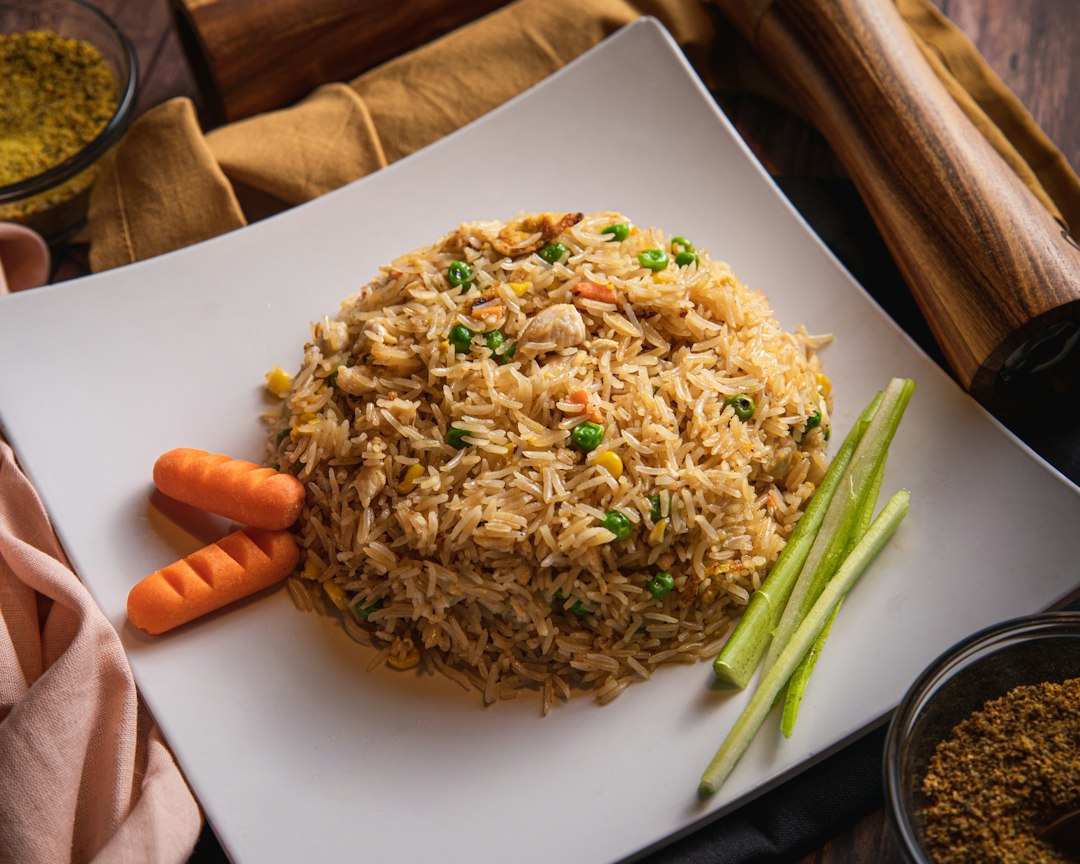
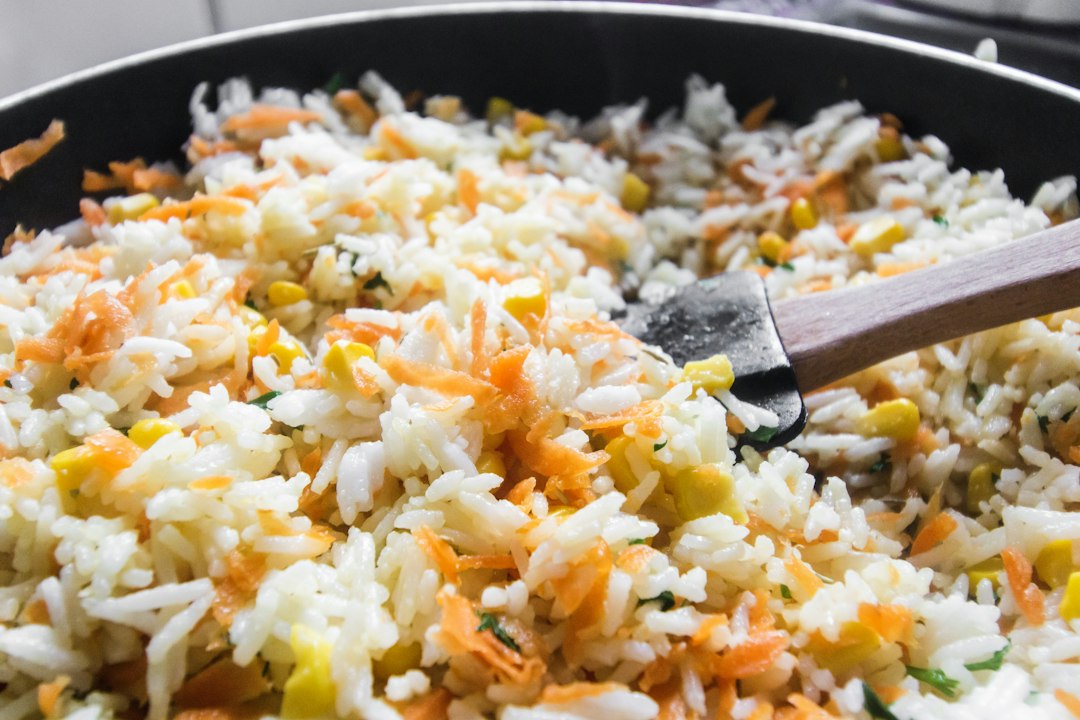
Vegetable fried rice serving example. Refrigerate leftovers promptly after the meal. Photo by Christopher Alvarenga on Unsplash.
How long does fried rice last in the fridge? Decision guide
| What happened to the rice? | What should you do? |
|---|---|
| Refrigerated promptly, kept at 40°F or below, and within 3–4 days | Use within that window; reheat to 165°F throughout if serving hot. |
| Left at room temperature for more than 2 hours, or more than 1 hour above 90°F | Discard. Heating or freezing cannot rescue it. |
| Stored in the fridge for more than 4 days | Discard even if it smells normal. |
| You cannot establish a safe handling history | Discard rather than guessing. |
| Dry or firm grains, but safe storage is confirmed | This can be a texture issue; add a little moisture during reheating. |
U.S. and UK advice differ. This guide uses USDA guidance for a U.S. audience. The Food Standards Agency advises cooling rice quickly, ideally within one hour, keeping it refrigerated for no more than 24 hours before reheating, and reheating no more than once. Under that once-only approach, frying previously cooked rice is already a reheating step; do not plan to reheat it again. Readers following UK guidance should use that shorter rice-specific limit. See the FSA’s rice storage and reheating advice.
Does Frying Day-Old Rice Start a New Storage Clock?
The answer to “how long does fried rice last in the fridge” depends partly on when the rice was originally cooked. Many fried rice recipes start with chilled, previously cooked rice. That original cooking date matters. As a conservative household practice, track the oldest previously cooked ingredient and plan to use the finished dish within that ingredient’s remaining storage window. This is a practical precaution, rather than a rice-specific counting formula stated by USDA.
For example, you cook plain rice on Monday evening, cool it promptly, and keep it refrigerated. On Wednesday, you use it to make fried rice. Plan to eat the finished dish promptly within the original rice’s storage window; do not automatically give it a new deadline of Sunday. The same caution applies if you add older cooked chicken or vegetables.
Write two dates when needed: “Rice cooked Monday; fried rice made Wednesday.” If one ingredient has a shorter applicable storage limit, follow that limit. Frying cannot undo earlier unsafe handling, and adding fresh vegetables does not make old leftovers younger.
Why Fried Rice Needs Fast Cooling
Cooked rice needs more than a quick smell check. Bacillus cereus spores can survive cooking. If rice stays warm for too long, the bacteria can multiply and may produce toxins. The FDA notes that the vomiting-type illness is often associated with rice and other starchy foods, and that cooking may not disable the toxin once it has formed. This is why reheating cannot make rice safe after improper storage.
The useful controls are time and temperature: cool the rice promptly, keep it cold, and discard it when the storage history is uncertain. Never taste questionable rice to check it. See the FDA’s Bacillus cereus guidance and the USDA’s leftover-safety guidance.
How to Store Fried Rice in the Fridge Safely
- Divide the batch. Transfer rice from the wok or serving bowl into small, shallow containers. Choose lunch-sized portions instead of one deep tub so the center cools faster.
- Refrigerate promptly. Hot food can go directly into the refrigerator in shallow containers. Do not wait for a large batch to reach room temperature, and do not leave rice in a switched-off cooker.
- Check the fridge. Use an appliance thermometer to confirm 40°F or below. Leave room for cold air to circulate and keep containers away from raw meat juices.
- Cover and label. Use food-safe covered containers. Mark the cooking date and time, the original rice date if different, and the meal you plan to use it for.
- Choose fridge or freezer. Refrigerate portions you will eat within the applicable window and freeze extras promptly. Put older labeled containers at the front; keep different batches separate.
Do not mix a new batch into older leftovers. Reheat only the portion you plan to eat so the rest stays cold.
How to Reheat Fried Rice to 165°F
Reheat fried rice to 165°F throughout. Break up cold clumps and check more than one spot with a food thermometer because the surface can steam while the center remains cool.
How to Reheat Fried Rice in the Microwave
Put one portion in a microwave-safe bowl and gently loosen compacted grains with a fork. Start with about 1 teaspoon of water per cup of rice, adding a little more if it is very dry. Cover with a microwave-safe lid that allows steam to escape. Heat in short intervals and stir between intervals, moving rice from the cool center toward the warmer edges. Follow your microwave’s instructions for standing time, then check several spots with a food thermometer. If any spot is below 165°F, continue heating, stir, and check again. Too much water can make the rice soggy, so add it gradually.
Reheating Fried Rice in a Skillet
Choose a skillet wide enough to spread out the portion. Add a small splash of water, break up the clumps, and cover briefly over medium heat to loosen the grains with steam. Uncover and stir frequently as the rice heats, scraping the bottom to prevent sticking. Let excess moisture evaporate if you prefer a firmer finish. Check several spots for 165°F; sizzling sounds or a hot pan do not tell you whether the rice’s center is hot enough. Cooking time varies with portion size, so use temperature as the endpoint.
Green onions, sauce, or already-cooked vegetables can go in while the rice reheats. Cook raw egg, meat, poultry, or seafood separately so raw juices do not contaminate the rice; then combine the cooked additions and bring the finished mixture to 165°F. The federal safe-temperature chart lists 160°F for egg dishes and ground meats, 165°F for poultry, and 145°F for fish.
How to Tell if Fried Rice Is Bad: When to Discard It
- It sat at room temperature for more than 2 hours, or more than 1 hour above 90°F.
- It has been refrigerated for more than 4 days.
- You do not know how long takeout or leftovers were unrefrigerated.
- It has mold, an unusual sour odor, unexpected discoloration, or a slimy film.
Sticky rice is not automatically spoiled; some rice varieties and sauces are naturally sticky. More importantly, rice that looks and smells normal can still be unsafe after time-temperature abuse. If the storage history is safe but the texture is the problem, see the guide to fixing gummy rice. When in doubt about safety, throw it out.
How to Freeze and Reheat Fried Rice
Freeze only rice that has been handled safely. If you will not finish it within its refrigerated storage window, freeze extra portions promptly instead of waiting until their age becomes uncertain. Freezing does not make rice safe after it has been left warm too long.
For practical freezer portions, chill rice promptly in shallow containers, then pack it into freezer-safe bags in a thin, flat layer. Gently press out excess air and seal, or use small freezer-safe containers. Label the cooking and freezing dates. Flat portions are easier to stack and break apart than a dense block.
USDA recommends using frozen leftovers within 3 to 4 months for best quality. Food held continuously at 0°F (-18°C) stays safe longer, but grains can dry out and lose flavor. Freezer burn is a quality problem, separate from unsafe handling before freezing.
Thaw in the refrigerator, or reheat directly from frozen. Do not thaw on the counter. Use a splash of water and a cover to loosen frozen clumps, then stir thoroughly as the portion heats. Check several spots for 165°F before serving. Season after heating: adding extra soy sauce to soften dry rice can make it too salty.
Fried rice in a pan. When reheating safely stored leftovers, stir and check several spots for 165°F. Photo by Louis Hansel on Unsplash.
Does Chicken, Shrimp, or Egg Change the Storage Limit?
Chicken fried rice, shrimp fried rice, and egg fried rice all need prompt refrigeration. Adding protein does not extend the storage window, and vegetable fried rice still requires careful handling because cooked rice itself can support bacterial growth. Follow any shorter storage instructions supplied with a packaged ingredient or restaurant meal.
How to Store Leftover Fried Rice for Meal Prep
For meal prep, label each portion with its cooking date and decide which meals need freezing. Make portions match the meals you actually plan to eat. A wide, shallow container holding one lunch cools faster and lets you remove one serving without warming the rest.
Suppose you make a batch Sunday at 6 p.m. using freshly cooked ingredients and refrigerate it promptly. Label two containers “Sunday, 6 p.m.—Monday lunch” and “Sunday, 6 p.m.—Tuesday lunch.” Freeze the portion intended for Friday promptly. Under the U.S. 3-to-4-day guidance, plan to use safely handled refrigerated portions by Thursday, the fourth day; freeze Friday’s portion promptly instead.
If Sunday’s batch uses rice cooked Saturday, use Saturday’s date for a conservative meal plan. A new container or another trip through the microwave does not erase the earlier storage history. These examples assume continuous safe refrigeration; a lunch forgotten in a warm car must be assessed separately.
For a packed lunch, keep the container refrigerated until departure and transport it in an insulated bag with ice packs. Put it into a refrigerator on arrival when one is available. An airtight container helps protect texture and prevent spills, but it cannot keep rice cold by itself.
Takeout Fried Rice: Delivery and Restaurant Leftovers
Count all time without safe hot or cold holding, including transport, delivery, and eating. Delivery does not start a fresh two-hour window. Refrigerate promptly on arrival, and transfer a large portion from a deep takeout carton into shallow food-safe containers. A hot-looking carton does not establish its holding temperature or earlier handling history.
For example, assume rice is outside safe hot or cold holding throughout a 45-minute drive and 45 minutes on the table. That adds up to 90 minutes without temperature control. Another 45-minute errand would take that total beyond two hours. If conditions are above 90°F, the one-hour limit is shorter still. For cold leftovers, use a cooler with ice packs; otherwise, skip bringing them along on a long outing.
Do not assume restaurant rice gets a longer shelf life because it contains soy sauce or was cooked over high heat. Ask about any specific storage instructions the restaurant provides, and discard a meal when you cannot establish that it was handled safely. The USDA’s takeout handling guide explains temperature control during transport and storage.
Frequently Asked Questions About Fried Rice Shelf Life
Can you eat leftover fried rice cold?
Cold rice is only an option when it was cooled promptly, stayed refrigerated, and is still within the applicable storage window. Eating it cold does not remove the need for safe handling. If you choose to reheat it, heat it evenly throughout.
Why does refrigerated fried rice become hard?
Rice grains firm up during refrigeration and can lose moisture in storage. Firm grains alone do not mean the rice is spoiled. For safely stored leftovers, a small splash of water and covered reheating can soften them; discard rice with an unsafe storage history regardless of texture.