
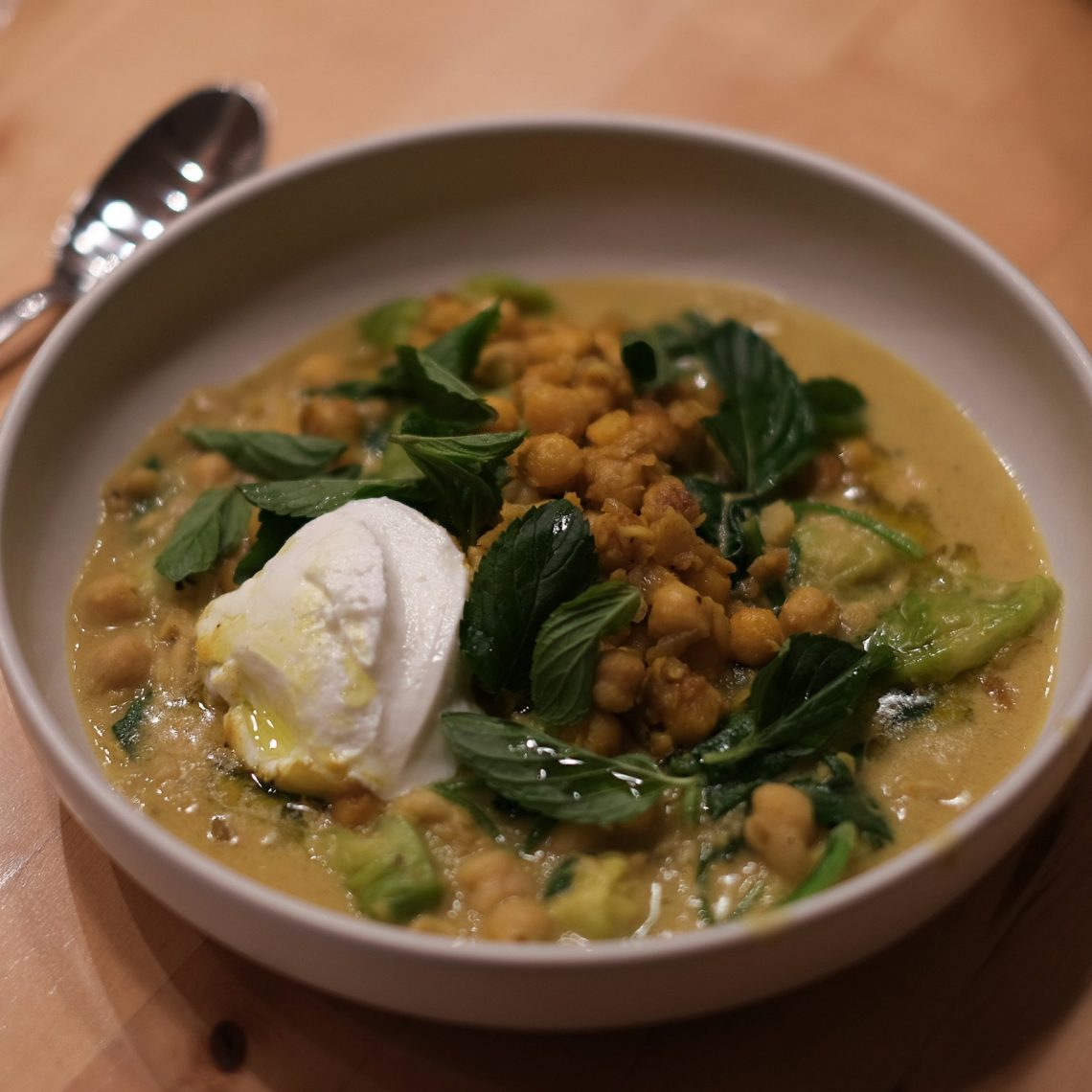
This chickpea stew with cornmeal drop dumplings turns a pot of vegetables and canned beans into a complete spoon-and-bowl supper. The stew has a lightly thickened broth, and eight small dumplings steam on the surface under a lid. A little cornmeal gives the dumplings a gentle corn flavor while all-purpose flour provides their structure.
The recipe has two distinct stages. First, cook the vegetables and bring the stew to the right consistency. Then mix the dumpling batter, portion it onto the gently simmering surface and cover the pot. Keeping the lid in place during the main steaming time helps the dumplings cook through evenly.
Give cornmeal dumplings room to steam
Finish the stew first
Correct the chickpea base for salt, thickness and simmering temperature before spooning batter over it.
Portion evenly
Similar dumplings cook at the same rate and leave enough exposed liquid for steam to circulate.
Keep the lid closed
Opening repeatedly releases steam and lengthens the cooking time for the centers.
Test the largest dumpling after the full covered time. Its center should look set rather than pasty, while the stew beneath remains loose enough to spoon.
Choose a pot with room across the top
Affiliate disclosure: As an Amazon Associate I earn from qualifying purchases. Paid links open Amazon search results.
Use a wide 5-quart Dutch oven (paid link) or deep sauté pan, roughly 10–12 inches across inside, with a tight-fitting lid. The dumplings need space on the surface as they expand. A very narrow saucepan can crowd them together and make the centers harder to judge. The stew should be deep enough to stay moist during steaming without covering the dumplings completely. A set of measuring cups and spoons (paid link) helps keep the dumpling batter accurate.
Have all the dry dumpling ingredients measured before the stew is ready, but wait to add milk and oil until just before portioning. Mix gently and stop when no dry flour remains. A long, vigorous beating is unnecessary and can make the dumplings tougher.
Recipe quantities
Yield: 4 servings, each with 2 dumplings. Preparation: 15 minutes. Cooking: about 45 minutes. Total: about 1 hour. You will need the wide covered pot, a bowl, whisk, measuring cups, two spoons and a knife for checking a dumpling’s center.
For the chickpea stew
- 2 tablespoons olive oil
- 1 medium onion, approximately 150 g, diced
- 2 medium carrots, approximately 150 g, cut into 1/4-inch pieces
- 2 celery stalks, approximately 100 g, diced
- 2 garlic cloves, minced
- 1/2 teaspoon dried thyme
- 2 tablespoons all-purpose flour
- 4 cups low-sodium vegetable broth
- 2 cans chickpeas, 15 ounces each, drained and rinsed
- 1/2 teaspoon fine salt, divided, plus more if needed
- 1/4 teaspoon black pepper
- 2 tablespoons chopped fresh parsley
- Up to 1/2 cup hot water, if needed to loosen the stew
For 8 cornmeal dumplings
- 1 cup all-purpose flour, approximately 120 g, spooned and leveled
- 1/3 cup fine yellow cornmeal, approximately 50 g
- 2 teaspoons baking powder
- 1/4 teaspoon fine salt
- 2/3 cup milk, approximately 160 ml
- 2 tablespoons olive oil or another neutral-tasting oil
Use baking powder, not baking soda. Fine cornmeal gives a more even texture than coarse grits or polenta. The flour in the stew is separate from the flour in the dumplings, so measure both portions. The finished batter should be soft enough to drop from a spoon but thick enough to hold a mound.
Cook chickpea stew with cornmeal drop dumplings
- Soften the vegetables. Heat the oil over medium heat. Add the onion, carrots, celery and 1/4 teaspoon salt. Cook for 8 to 10 minutes, stirring, until the onion softens and the carrots begin to yield. Add the garlic and thyme and stir for 30 seconds.
- Build the broth. Sprinkle the 2 tablespoons stew flour over the vegetables and stir for 1 minute. Gradually add the broth, stirring to disperse the flour. Add the chickpeas, remaining measured salt and pepper. Bring to a gentle simmer.
- Finish the base. Simmer uncovered for about 10 minutes, until the carrots are nearly tender and the broth lightly coats a spoon. It should remain loose enough to bubble around the dumplings. Add a little hot water if it has become very thick.
- Mix the dumplings. Whisk the flour, cornmeal, baking powder and salt in the bowl. Stir the milk and oil together, then add them to the dry mixture. Fold just until combined. Do not taste the raw batter; flour is a raw ingredient.
- Portion onto the stew. Keep the stew at a gentle simmer. Divide the batter into 8 similar mounds, using two spoons to drop them onto the surface with a little room between them. Keep the mounds modest and similar in size rather than making a few very large dumplings.
- Steam under the lid. Cover tightly and cook over low heat for 18 to 20 minutes without lifting the lid during the first 18 minutes. The stew should simmer gently, not boil hard enough to toss the dumplings around.
- Check the centers. Lift one of the largest dumplings and cut it open. The inside should be set and breadlike, with no glossy or wet raw batter. If underdone, return it to the pot, cover and cook for another 3 to 5 minutes before checking again.
- Serve gently. Turn off the heat and let stand for 2 minutes. Scatter parsley over the stew. Spoon two dumplings into each bowl, then add the chickpeas and vegetables around them. Taste the broth before adding any final salt.
Know what properly cooked dumplings look like
The surface will be soft rather than browned because the dumplings cook in steam. That is expected. The center should have a tender, set crumb and should not smear like raw batter when cut. A dry-looking top alone is not enough; check a large dumpling from the center of the pot.
The FDA’s flour safety guidance explains why raw flour and batter should not be tasted. Keep the batter bowl and utensils separate from finished food, wash them after use and cook the dumplings fully before serving. This matters even though the batter contains no raw egg.
Troubleshooting the steaming stage
| Problem | Likely reason and response |
|---|---|
| Dumplings are dense | Check baking powder freshness and avoid overmixing next time. |
| Centers are wet | They need more covered cooking; check mound size and keep a gentle simmer. |
| Stew is very thick | Add hot water carefully around the edge before covering again. |
| Dumplings break apart | The boil may be too vigorous or the batter too loose; lower heat and handle gently. |
Do not repeatedly lift the lid simply to watch the dumplings. Each opening releases steam, so use the timer and keep the first covered period uninterrupted. If your burner runs hot even on low, move the pot to a smaller burner that maintains a gentle simmer.
Frequently Asked Questions
Can I make the stew base ahead?
Yes. Cool and refrigerate the base promptly, then reheat it to 165°F and bring it to a gentle simmer before adding freshly mixed dumplings. Add water if needed so the base has enough moisture for steaming.
Can chickpea stew with cornmeal drop dumplings be made dairy-free?
An unsweetened plain plant milk is a possible dumpling variation, but it may change the texture and needs its own kitchen check. Avoid sweetened or vanilla-flavored milk. The main recipe is written for ordinary milk.
Can I use self-rising flour?
Not as a direct swap while keeping the same baking powder and salt. Self-rising flour already contains leavening and seasoning. Use all-purpose flour for the measured formulation here rather than guessing how to compensate.
Can I use coarse cornmeal?
Coarse cornmeal or grits may remain gritty in the dumpling center. Fine cornmeal is the intended ingredient. Changing the grind can require a different hydration step and cooking assessment.
Can I double the recipe?
Two wide pots are more practical than crowding twice as many dumplings into one. The surface area matters as much as the stew volume. Keep the dumplings the same size and use the same center-doneness check in each pot.
What should I serve alongside?
A crisp green salad or simple cooked greens is enough. The dumplings already supply the breadlike part of the meal, so extra bread is optional. Keep toppings light so the dumpling texture remains easy to enjoy.
Store the portions
Refrigerate shallow portions within 2 hours, or within 1 hour above 90°F. Store at 40°F or below and use within 3 days. Keep dumplings and stew in separate containers if possible so the dumplings absorb less broth. Reheat covered with a little added liquid until the center of the dumplings and stew both reach 165°F.
For freezing, the stew base without dumplings is the better quality choice. Freeze for up to about 2 months, thaw in the refrigerator and reheat thoroughly before making fresh dumplings. Stored dumplings become softer, so the first serving is the best guide to the intended texture.
For a lighter chickpea bowl on another day, try our chickpea lemon soup with celery. Our eggless skillet cornbread is an alternative accompaniment when making a separate soup instead of dumplings.
Food handling references: FDA storage guidance and FoodSafety.gov reheating temperatures.
Chickpea Stew With Cornmeal Drop Dumplings
Ingredients
Equipment
Method
- Soften the vegetables. Heat the oil over medium heat. Add the onion, carrots, celery and 1/4 teaspoon salt. Cook for 8 to 10 minutes, stirring, until the onion softens and the carrots begin to yield. Add the garlic and thyme and stir for 30 seconds.
- Build the broth. Sprinkle the 2 tablespoons stew flour over the vegetables and stir for 1 minute. Gradually add the broth, stirring to disperse the flour. Add the chickpeas, remaining measured salt and pepper. Bring to a gentle simmer.
- Finish the base. Simmer uncovered for about 10 minutes, until the carrots are nearly tender and the broth lightly coats a spoon. It should remain loose enough to bubble around the dumplings. Add a little hot water if it has become very thick.
- Mix the dumplings. Whisk the flour, cornmeal, baking powder and salt in the bowl. Stir the milk and oil together, then add them to the dry mixture. Fold just until combined. Do not taste the raw batter; flour is a raw ingredient.
- Portion onto the stew. Keep the stew at a gentle simmer. Divide the batter into 8 similar mounds, using two spoons to drop them onto the surface with a little room between them. Keep the mounds modest and similar in size rather than making a few very large dumplings.
- Steam under the lid. Cover tightly and cook over low heat for 18 to 20 minutes without lifting the lid during the first 18 minutes. The stew should simmer gently, not boil hard enough to toss the dumplings around.
- Check the centers. Lift one of the largest dumplings and cut it open. The inside should be set and breadlike, with no glossy or wet raw batter. If underdone, return it to the pot, cover and cook for another 3 to 5 minutes before checking again.
- Serve gently. Turn off the heat and let stand for 2 minutes. Scatter parsley over the stew. Spoon two dumplings into each bowl, then add the chickpeas and vegetables around them. Taste the broth before adding any final salt.
Notes
| Problem | Likely reason and response |
|---|---|
| Dumplings are dense | Check baking powder freshness and avoid overmixing next time. |
| Centers are wet | They need more covered cooking; check mound size and keep a gentle simmer. |
| Stew is very thick | Add hot water carefully around the edge before covering again. |
| Dumplings break apart | The boil may be too vigorous or the batter too loose; lower heat and handle gently. |




