Corned beef doneness
The internal temperature for corned beef must reach at least 145°F (63°C), followed by a 3-minute rest. Tender slices usually need longer gentle, moist cooking. Use a thermometer for safety and a fork or probe for texture.
Safe temperature versus tender texture
USDA FSIS says raw corned beef should reach 145°F as measured with a food thermometer before it leaves the heat, then rest for at least three minutes. The same agency also describes corned beef as a less-tender cut that needs long, moist cooking and recommends using both a thermometer and fork tenderness.
| Check | What it tells you | What to do |
|---|---|---|
| 145°F plus a 3-minute rest | Minimum safety target for raw corned beef | Do not serve below this point |
| Probe or fork slides in with little resistance | Connective tissue has softened enough for tender slices | Remove from heat when the texture is right |
| Upper 180s to about 200°F | Common texture range, not a required safety number | Use as a clue, then confirm tenderness |
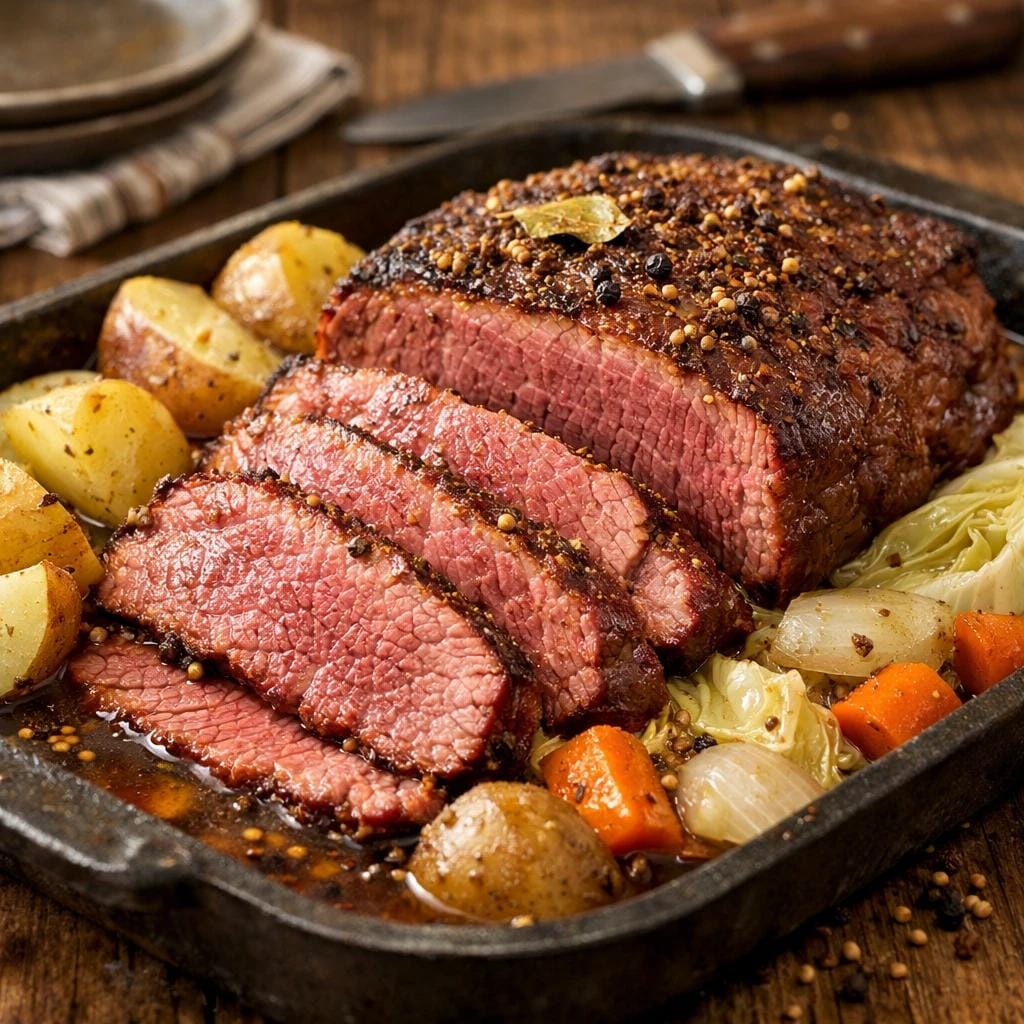
Curing salts can keep cooked corned beef pink. Color and clear juices do not prove doneness, so place an instant-read thermometer in the center of the thickest section and avoid large seams of fat or contact with the pan.
How to check corned beef correctly
- Insert the probe into the thickest part of the brisket from the side so the tip reaches the center.
- Keep the tip out of large fat pockets and away from the pot, rack, or pan.
- Confirm at least 145°F in the coolest part. Check a second location on a thick or uneven brisket.
- Test texture separately. A fork, skewer, or thermometer probe should enter with little resistance.
- If it is safe but still tough, continue the covered, moist cooking and check again later.
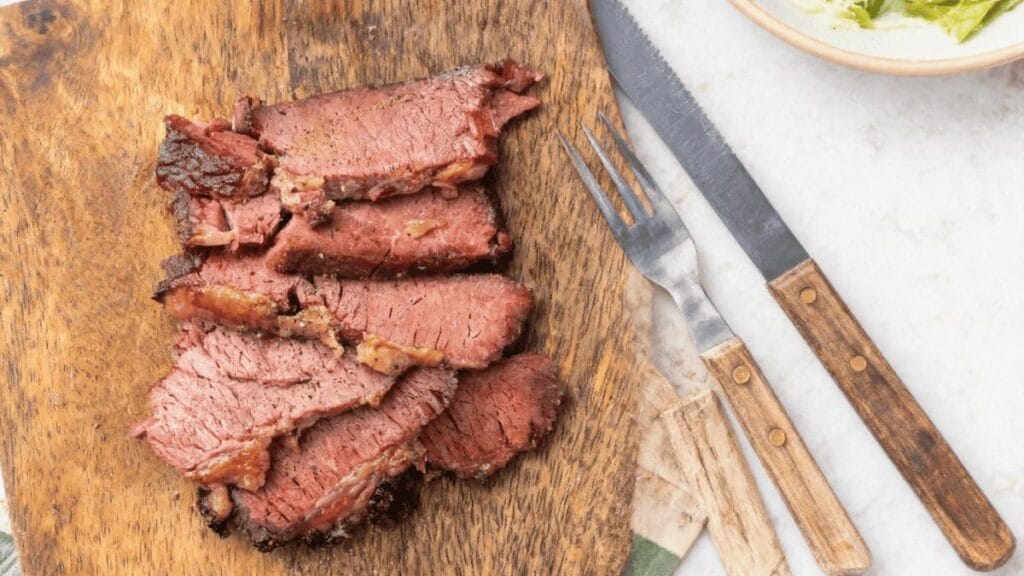
Covered oven method for a 3- to 5-pound brisket
This method follows the basic USDA approach. Package directions should take priority when they differ because curing and cut thickness vary.
Ingredients and equipment
- One 3- to 5-pound uncooked corned beef brisket
- The included spice packet, if desired
- Water, enough to barely cover the brisket in the pan
- A covered roasting pan or a deep pan sealed tightly with foil
- An instant-read food thermometer
Step-by-step directions
- Heat the oven to 350°F. USDA guidance says not to use an oven setting below 325°F for this method.
- Remove the brisket from its package. Place it fat-side up in the roasting pan and add the spice packet if using.
- Add enough water to barely cover the meat. Cover the pan tightly so the liquid does not evaporate too quickly.
- Plan on roughly 1 hour per pound, but begin checking before the estimate ends. Time is a planning tool, not a doneness test.
- Confirm at least 145°F in the thickest part. If a probe or fork still meets firm resistance, cover the pan again and continue cooking until tender.
- Transfer the brisket to a board and rest it for about 20 minutes for easier slicing.
- Identify the long muscle fibers and slice thinly across the grain.
Stovetop and slow-cooker options
Gentle stovetop simmer
Put the brisket fat-side up in a large pot and cover it with water. Bring the water just to a boil, then immediately reduce the heat to a gentle simmer. Keep the pot covered and allow about 1 hour per pound. Add potatoes, carrots, or cabbage only when enough cooking time remains for them to become tender; USDA suggests the final 20 to 30 minutes for stovetop vegetables. Verify 145°F, then continue until the meat is fork-tender.
Slow cooker
Place root vegetables in the bottom if using, then set the brisket on top. Add about 1½ cups of water or enough liquid to cover the meat, depending on the cooker. USDA’s published method starts on High for the first hour, then cooks for 10 to 12 hours on Low or 5 to 6 hours on High. Check both temperature and tenderness before serving. Appliance size and brisket thickness can change the finish time.
Troubleshooting tough, dry, or salty corned beef
It reached 145°F but is still tough
The meat is safe after the required rest, but its collagen has not softened enough. Return it to the covered cooking liquid and continue at a gentle heat. Check every 20 to 30 minutes rather than raising the heat.
The meat is dry or stringy
A rolling boil, an uncovered pan, or cooking long after the brisket became tender can squeeze out moisture. Keep the liquid at a simmer, maintain the cover, and stop when the probe slides in easily. Slice only after resting and always cut across the grain.
The flavor is too salty
Check the package directions first. If you prefer a milder result, you may rinse away surface brine before cooking, taking care not to splash nearby surfaces. Cooking in fresh water and serving with unsalted vegetables can also balance the cured flavor.
Storage and reheating
Refrigerate cooked corned beef within 2 hours, or within 1 hour above 90°F. Divide a large brisket into smaller portions and use shallow containers. Keep leftovers refrigerated for 3–4 days; freeze for 2–3 months for best quality, following USDA corned beef guidance.
Reheat leftovers to 165°F (74°C). Add a spoonful of cooking liquid or broth, cover the slices, and warm gently so the edges do not dry out.
Useful related guides
For other meat-temperature questions, see our steak doneness temperature chart and ground-beef refrigerator safety guide.
Corned beef doneness questions
Is corned beef safe at 145°F?
Yes, raw corned beef is safe after it reaches 145°F in the thickest part and rests for at least three minutes. It may still be too firm for the texture most people expect, so continue moist cooking until it is fork-tender.
Why is cooked corned beef still pink?
The curing process commonly uses nitrite, which can keep the meat pink after cooking. Check temperature with a thermometer instead of judging by color.
Can corned beef be overcooked?
Yes. Long moist cooking helps connective tissue soften, but cooking well past the tender stage can still make the fibers dry or stringy, especially if the liquid evaporates.
The reliable doneness check
Use temperature for safety and probe tenderness for eating quality. Confirm at least 145°F plus a three-minute rest, continue gentle moist cooking until a fork enters easily, rest the brisket, and slice across the grain. That approach is more dependable than color, a fixed clock time, or one universal high-temperature target.