
Quick Recipe Overview
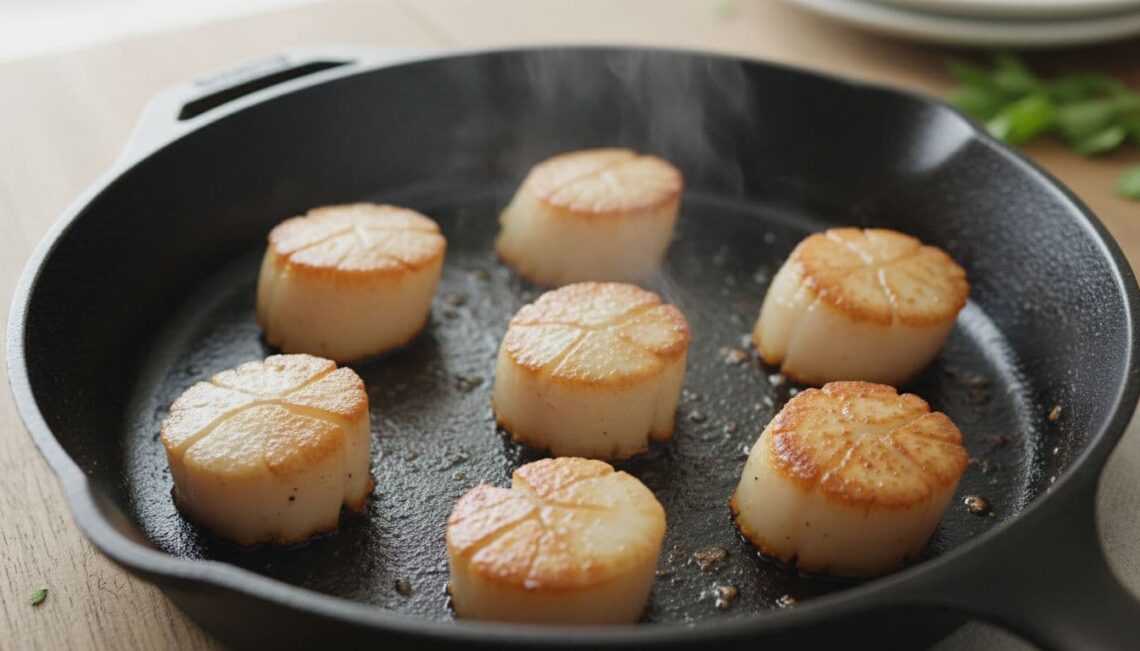
1¼ pounds of large dry sea scallops sear in a hot skillet for 2–3 minutes on the first side and 1–3 minutes on the second, then sit on a smooth purée of 2 cups frozen peas, broth, butter, lemon juice and zest. The purée is made first and held warm, so the scallops go straight from pan to plate. Serves 4.
Best method: pat the scallops very dry, leave space in a hot pan, and don’t move them until a golden crust forms.
| Prep | 15 min | Cook | 15 min |
|---|---|---|---|
| Total | 30 min | Serves | 4 |
| Heat | Medium-high skillet | Done when | Opaque, milky white and firm |
Seared scallops with lemon pea puree is a 30-minute dinner that looks like a restaurant plate: golden-crusted sea scallops on a bright green, lemony purée made from 2 cups of frozen peas. It serves 4 and needs only one saucepan, one skillet and a blender.
It’s a good choice for a date night, a small dinner party, or anyone who wants to learn to sear scallops well. The order does most of the work. Make the purée first and keep it warm, then give the 5-minute sear your full attention.
Equipment
- Wide, heavy skillet (cast iron or stainless steel): holds heat so the scallops brown instead of steaming.
- Small saucepan for the peas.
- Blender or immersion blender: a high-speed blender gives the silkiest purée.
- Paper towels for drying the scallops.
- Thin tongs or a fish spatula for turning.
- Instant-read thermometer (optional) for checking the thickest scallop.
Ingredients
| Ingredient | Amount | Why / swaps |
|---|---|---|
| Large dry sea scallops | 1¼ lb, side muscles removed | “Dry” means not treated with a moisture-retaining solution, so they brown better. Bay scallops are too small for this method. |
| Frozen peas | 2 cups | Sweet and consistent. Fresh peas work; cook until tender. |
| Low-sodium vegetable broth | ⅓ cup, plus more | Helps the blender run. Chicken broth works. |
| Butter | 2 tbsp, divided | 1 tbsp for the purée, 1 tbsp to baste. Use olive oil for dairy-free. |
| Lemon juice | 1 tbsp | Brightens the peas. |
| Lemon zest | 1 tsp, finely grated | Aroma without extra acid. |
| Fine salt | ½ tsp, divided | ¼ tsp each for purée and scallops. |
| Black pepper | ¼ tsp | Seasons the scallops. |
| Neutral oil | 1 tbsp | High smoke point for searing; avocado or canola. |
| Parsley and lemon wedges | 1 tbsp chopped; 1 lemon | Garnish. Chives or mint also suit peas. |
Allergens: contains shellfish (scallops, a mollusk) and milk (butter). Check that the broth is free of any allergens you avoid. For dairy-free, use olive oil in the purée and baste the scallops with oil instead of butter.
Why it works: dry surface, hot pan, short cook
Browning happens only once surface water has evaporated. Wet scallops or a crowded pan spend the first minutes steaming, and by the time they color, the inside is overcooked and rubbery. Drying them well and leaving space between them lets the crust form in 2–3 minutes while the center stays tender.
Butter goes in only after flipping. Added at the start, its milk solids would burn over medium-high heat. Added late, it browns lightly and adds flavor during the last minute.
For the purée, peas are simmered only 4–5 minutes. A long boil dulls the color and the fresh flavor. Lemon zest adds aroma and the juice adds brightness, so the sweet base doesn’t taste flat next to the rich scallops.
Step-by-step method
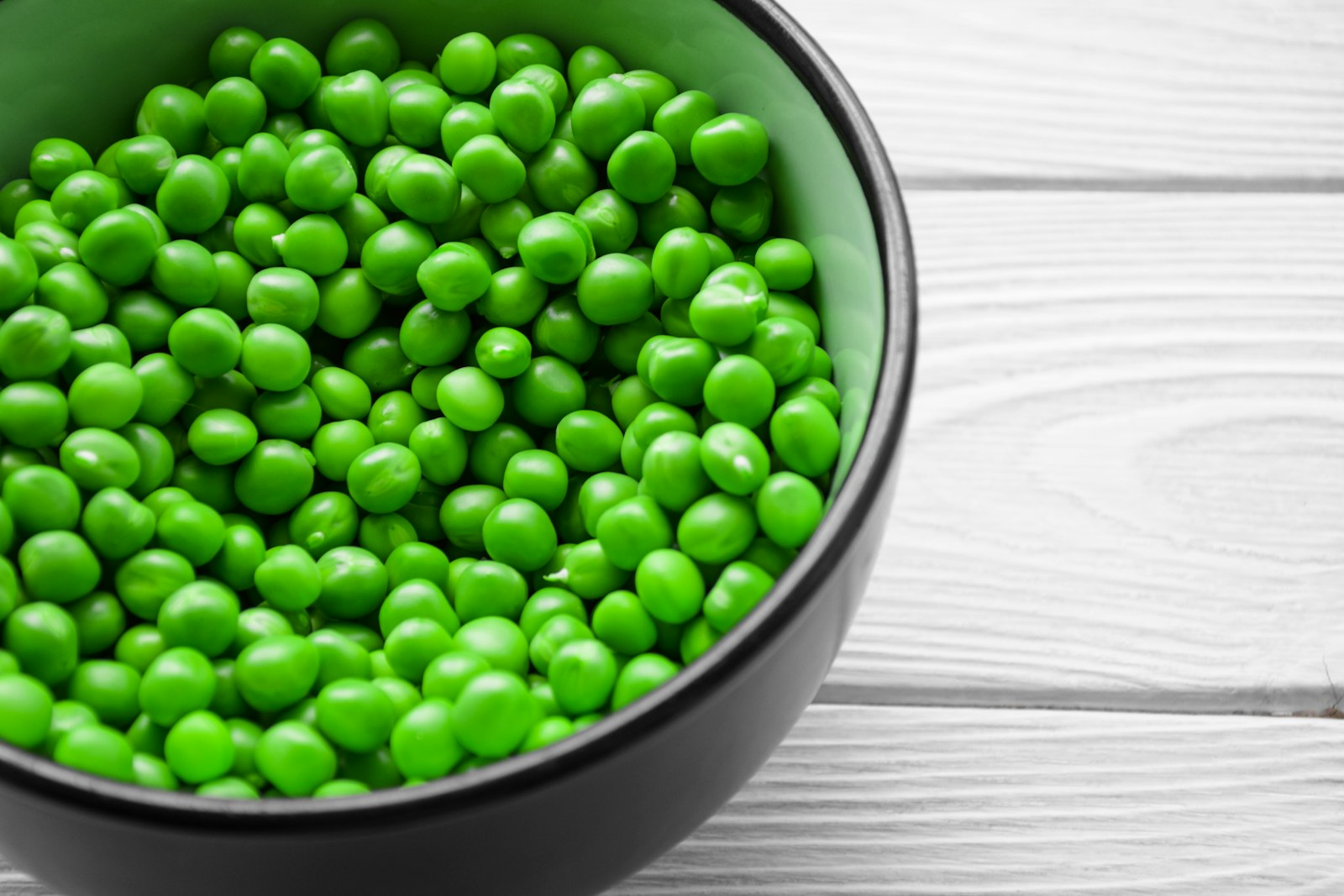
- Cook the peas (6–7 min). Simmer the peas and broth in a small saucepan for 4–5 minutes. Cue: peas are bright green and crush easily between your fingers.
- Blend the purée (2 min). Blend with 1 tablespoon butter, lemon juice, zest and ¼ teaspoon salt. With a jug blender, fill it no more than halfway, remove the center cap and cover the opening with a folded towel so steam can escape. Cue: smooth and thick enough to hold a soft mound on a spoon. Add broth a spoonful at a time if it’s too stiff.
- Hold it warm. Return the purée to the pan over the lowest heat and stir now and then. Cue: steaming gently, not bubbling.
- Dry and season the scallops (3 min). Pull off any side muscles. Press the scallops between paper towels until the surface feels tacky. Season with ¼ teaspoon salt and the pepper just before cooking.
- Heat the skillet (2–3 min). Heat the oil over medium-high. Cue: the oil shimmers and a scallop sizzles loudly as soon as it touches the pan, but the oil isn’t smoking heavily.
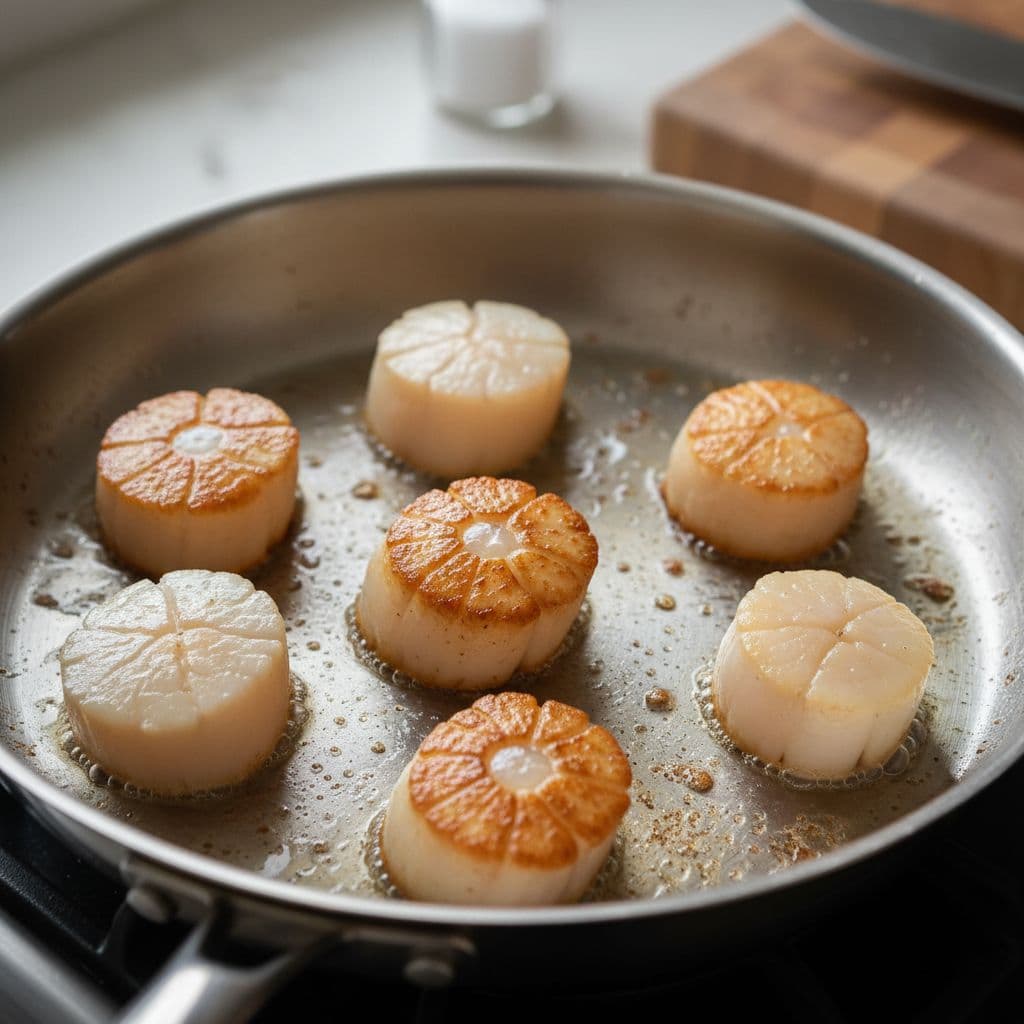
- Sear the first side (2–3 min). Add the scallops with about an inch between them, working in batches if needed. Don’t move them. Cue: a deep golden crust, and they release from the pan without sticking.
- Flip and baste (1–3 min). Turn the scallops and add the remaining tablespoon of butter, spooning it over them. Cue: the sides turn milky white all the way up, and they feel firm with a slight spring. Larger scallops take longer, so pull smaller ones first.
- Plate (1 min). Spoon the warm purée onto plates, set the scallops crust-side up, and scatter parsley. Serve with lemon wedges right away.
Timeline tip: the purée can be made up to a day ahead and reheated with a splash of broth. Warm the plates and set out the garnish before you start searing, since the scallops wait for no one.
Food safety
- FoodSafety.gov advises cooking scallops until the flesh is milky white or opaque and firm. If you use a thermometer, the thickest scallop reaching 145°F, the minimum for fish and shellfish, is a safe check. See the safe minimum internal temperature chart.
- Keep scallops refrigerated until you’re ready to cook. Thaw frozen scallops in the refrigerator, not at room temperature.
- Refrigerate leftovers within 2 hours (1 hour above 90°F), use within 3–4 days, and reheat to 165°F (USDA FSIS).
Troubleshooting
| Problem | Likely cause | Fix |
|---|---|---|
| Scallops steam in a pool of liquid | Wet-treated, not dried, or pan crowded | Buy dry scallops, pat dry again, and cook in smaller batches. |
| No golden crust | Pan not hot enough, or scallops moved too soon | Preheat until the oil shimmers and leave them alone for 2 minutes. |
| Scallops stick and tear | Flipped before the crust formed | Wait another 30 seconds; they release when ready. |
| Rubbery texture | Overcooked | Pull them as soon as the sides turn opaque and they feel springy-firm. |
| Purée is grainy | Blender not powerful enough, or peas undercooked | Blend longer, add a little broth, or push through a fine sieve. |
| Purée turned olive-drab | Peas boiled too long or held too hot | Simmer just 4–5 minutes and keep it on the lowest heat. |
| Butter burned | Added too early | Add butter only after flipping. |
What to serve with it
A green vegetable keeps the plate light. Our roasted asparagus with lemon zest echoes the lemon in the purée. For a heartier meal, add crusty bread or small roasted potatoes. To learn more about reading doneness cues, see how to know when scallops are done. The same quick-sear thinking applies to shrimp in how to know when shrimp are done.
Make-ahead, storage and reheating
- Purée: cool quickly, cover and refrigerate up to 3–4 days. Reheat gently with a spoonful of broth, stirring until steaming hot.
- Cooked scallops: best eaten right away. Refrigerate leftovers within 2 hours, separate from the purée, and use within 3–4 days.
- Reheating scallops: warm briefly in a covered skillet over low heat until they reach 165°F. They’ll be firmer. Cold leftover scallops are also nice sliced over a salad.
See the USDA leftovers guide for more.
Frequently asked questions
Can I use frozen scallops?
Yes. Thaw them overnight in the refrigerator, then dry them very thoroughly. Frozen scallops often release more water, so cook in smaller batches.
What is the difference between dry and wet scallops?
Wet scallops are treated with a solution that helps them hold water. They release that liquid in the pan and struggle to brown. Dry scallops aren’t treated and sear much better. Ask at the counter if the label isn’t clear.
Why are my scallops rubbery?
They cooked too long. Large sea scallops need only about 3–6 minutes in total. Take them off as soon as they’re opaque and firm.
What is the side muscle and should I remove it?
It’s a small, tough rectangular tab on the side of the scallop. It peels off easily and stays chewy when cooked, so remove it.
Can I make the pea purée without a blender?
Yes. Mash the peas well with a potato masher or fork and add broth gradually. It will be a rustic pea mash rather than a silky purée, but the flavor is the same.
Can I make the pea purée ahead?
Yes, up to a day ahead. Refrigerate it covered and reheat gently with a little broth. Cook the scallops just before serving.
Should I salt scallops ahead of time?
No. Season them right after drying and just before they go in the pan, so salt doesn’t draw out more moisture.
What pan is best for searing scallops?
A heavy cast iron or stainless steel skillet holds heat well. Nonstick works but usually browns less deeply.
Recommended tools
- 12-inch cast iron skillet: steady heat for a deep crust.
- Immersion blender: purée the peas right in the saucepan.
- Thin fish spatula: slides under scallops without tearing the crust.
- Fine rasp zester: fluffy lemon zest with no bitter pith.
As an Amazon Associate I earn from qualifying purchases.
The takeaway
Make the purée first, dry the scallops well, give them space in a hot pan, and stop cooking as soon as they’re opaque and firm. You’ll have a golden, tender, bright-green plate in 30 minutes.
Seared Scallops with Lemon Pea Puree
Yield: 4 servings · Prep: 15 min · Cook: 15 min · Total: 30 min
Equipment
Saucepan, blender or immersion blender, wide heavy skillet, paper towels, tongs, instant-read thermometer (optional)
Ingredients
- 1¼ lb large dry sea scallops, side muscles removed
- 2 cups frozen peas
- ⅓ cup low-sodium vegetable broth, plus more if needed
- 2 tbsp butter, divided
- 1 tbsp lemon juice
- 1 tsp finely grated lemon zest
- ½ tsp fine salt, divided
- ¼ tsp black pepper
- 1 tbsp neutral oil
- 1 tbsp finely chopped parsley
- 1 lemon, cut into wedges
Instructions
- Simmer peas and broth 4–5 minutes until tender. Blend with 1 tbsp butter, lemon juice, zest and ¼ tsp salt until smooth, venting the blender for hot food. Thin with broth if needed and keep warm over very low heat.
- Pat scallops very dry. Season with remaining ¼ tsp salt and the pepper just before cooking.
- Heat oil in a wide heavy skillet over medium-high. Add scallops with space between them, in batches if needed. Sear undisturbed 2–3 minutes until golden.
- Turn, add remaining 1 tbsp butter and cook 1–3 minutes more, until opaque, milky white and firm (145°F in the thickest scallop if measuring).
- Spoon purée onto plates, top with scallops, scatter parsley and serve immediately with lemon wedges.
Notes
Use large dry sea scallops, not bay scallops. Keep them refrigerated until just before drying and cooking. Contains shellfish and milk.




