This homemade rib sauce recipe uses ketchup, mustard, cider vinegar, and brown sugar for a balanced coating on baby back or spare ribs. Simmer the sauce separately, then brush it onto nearly tender ribs near the end of cooking so the sugar has less time to scorch.
About 1½ cups · 5 minutes prep · 10–15 minutes cooking
A measured sauce for two racks
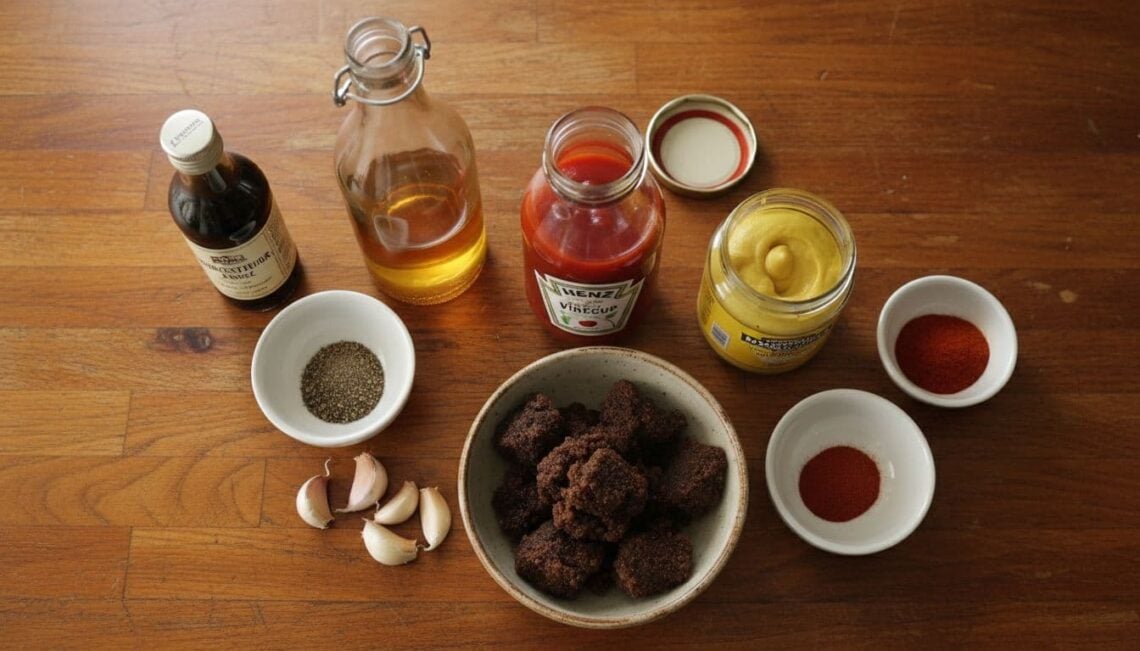
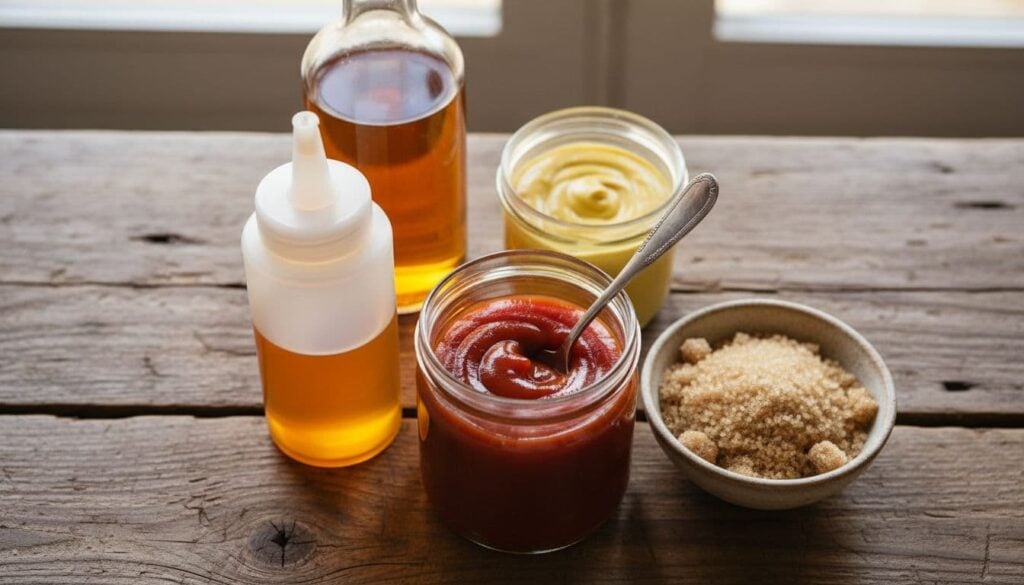
- 1 cup ketchup
- ¼ cup yellow mustard
- ¼ cup apple cider vinegar
- ¼ cup packed brown sugar
- 1 tablespoon Worcestershire sauce
- 1 teaspoon smoked paprika
- ½ teaspoon garlic powder
- ¼ teaspoon black pepper
- A pinch of cayenne, optional
- ¼ cup water
Yield is about 1½ cups after simmering, depending on how much liquid evaporates. Start with a light coating on roughly two racks and offer extra sauce separately. Ketchup, mustard, and Worcestershire already contribute salt; taste before adding any. Check labels for allergens, including fish in some Worcestershire sauces.
Whisk, simmer, and adjust
- Whisk all measured ingredients in a small heavy-bottomed saucepan before turning on the heat.
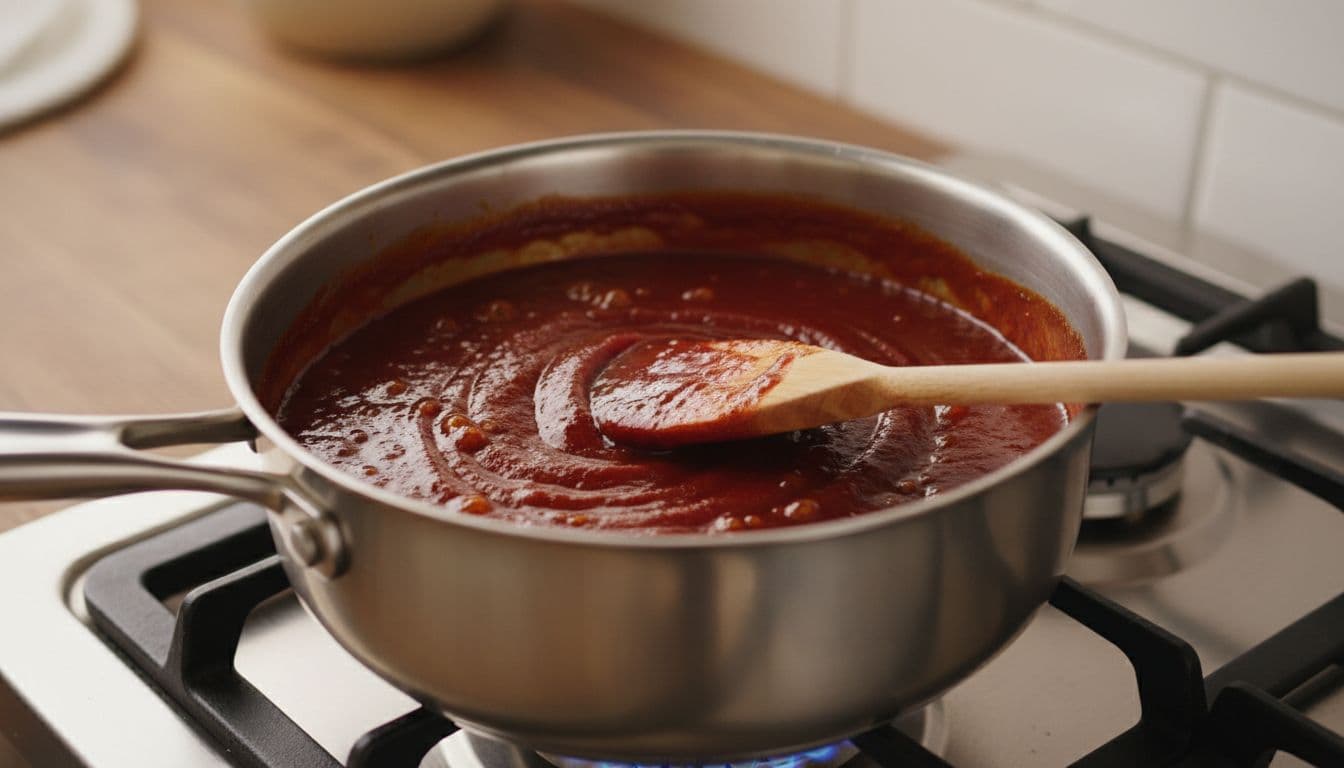
- Bring to a gentle bubble over medium heat, then reduce to low. Simmer uncovered for about 10–15 minutes, scraping the bottom and corners frequently.
- Stop when the sauce coats a spoon but still pours. It will thicken further as it cools. Cool a little on a clean saucer before tasting.
- If too thick, add water 1 tablespoon at a time. For more tang, add vinegar 1 teaspoon at a time; for more sweetness, try 1 teaspoon brown sugar. Stir and retaste after each change.
Optional cooked rib juices: skim off the fat and replace up to 2 tablespoons of the water with juices from fully cooked ribs. Add them during simmering, then taste carefully because the rub may make the juices salty. Do not use raw-meat juices as a finishing drizzle.
Choose the coating for the cut
| Rib cut | How to apply the sauce |
|---|---|
| Baby back ribs | Begin with a thin coating so the sauce supports the smaller rack. |
| Spare ribs | Try a slightly stronger tang by adjusting a small sauce sample with vinegar. |
| St. Louis-style ribs | These are trimmed spare ribs; their even shape makes a thin glaze easier to spread. |
The sauce works with all three, but it does not determine cooking time. Use our baby back ribs temperature guide and rib doneness checks to assess the meat before glazing. Whole pork needs at least 145°F followed by a 3-minute rest; barbecue tenderness generally requires more cooking. FoodSafety.gov provides the safety endpoints.
Set a glaze without burning it
- Reserve clean sauce for the table before filling a small basting bowl.
- Brush a thin film onto nearly tender ribs. In an oven or smoker, apply it during the final 15–30 minutes as a planning range; the actual surface heat matters more than the clock.
- Let the first coat become tacky before adding another. If grilling, keep the rack away from direct flame and move it immediately if the edges blacken.
- For a broiler finish, use a broiler-safe pan and follow the appliance’s rack-position instructions. Watch continuously from the start and remove the ribs when the glaze bubbles and sets. Do not use parchment under a broiler.
- Offer the reserved clean sauce at the table. Never top up the clean jar from a used basting bowl.
Flavor choices and related sauces
For more smoke, use a small pinch of smoked paprika. For heat, start with a little cayenne or test 1 teaspoon minced chipotle in a separate portion. Reducing sugar or using lower-sugar ketchup changes the glaze’s sweetness and browning, so expect a different result.
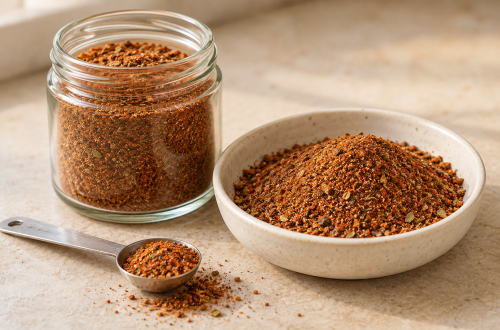
Choose sweet sauce for ribs for a molasses-forward glaze, or the more tangy mustard-forward baby back rib sauce. Pair this homemade rib sauce recipe with the BBQ rub ratio, adjusting salt so the two seasonings work together.
Store the sauce and reheat the ribs
Refrigerate untouched sauce in a shallow covered container within 2 hours, or 1 hour above 90°F. Keep it at 40°F or below and use within 3–4 days. Freeze small portions for longer storage and thaw in the refrigerator. Keep the serving portion separate from the basting bowl; never return used sauce or a used brush to the clean batch.
For reheating, USDA recommends bringing sauces to a rolling boil. Stir frequently and add a little water if needed to prevent scorching. These are refrigerated recipes, not tested canning formulas; sweetness or vinegar does not make them shelf stable.
Refrigerate cooked ribs separately for 3–4 days. Reheat in a covered oven-safe dish with a splash of water, using an oven at 325°F or above, until the meat reaches 165°F in several places. Serve with slaw, pickles, roasted vegetables, or another crisp side to balance the sauce.